
How to Master Trail Braking in iRacing & ACC
[EXECUTIVE BRIEFING] If you want to find those missing tenths of a second on your lap times, braking later isn’t always the answer. Braking smarter is. The secret separating alien drivers from the rest of the grid in simulators like iRacing and Assetto Corsa Competizione (ACC) lies in mastering one specific technique: Trail Braking.
But here is the hard engineering truth: learning how to trail brake in sim racing is almost impossible if your hardware is fighting against you. Trail braking isn’t just about slowing down; it’s about managing kinetic energy and weight transfer to optimize the contact patch of your tires.
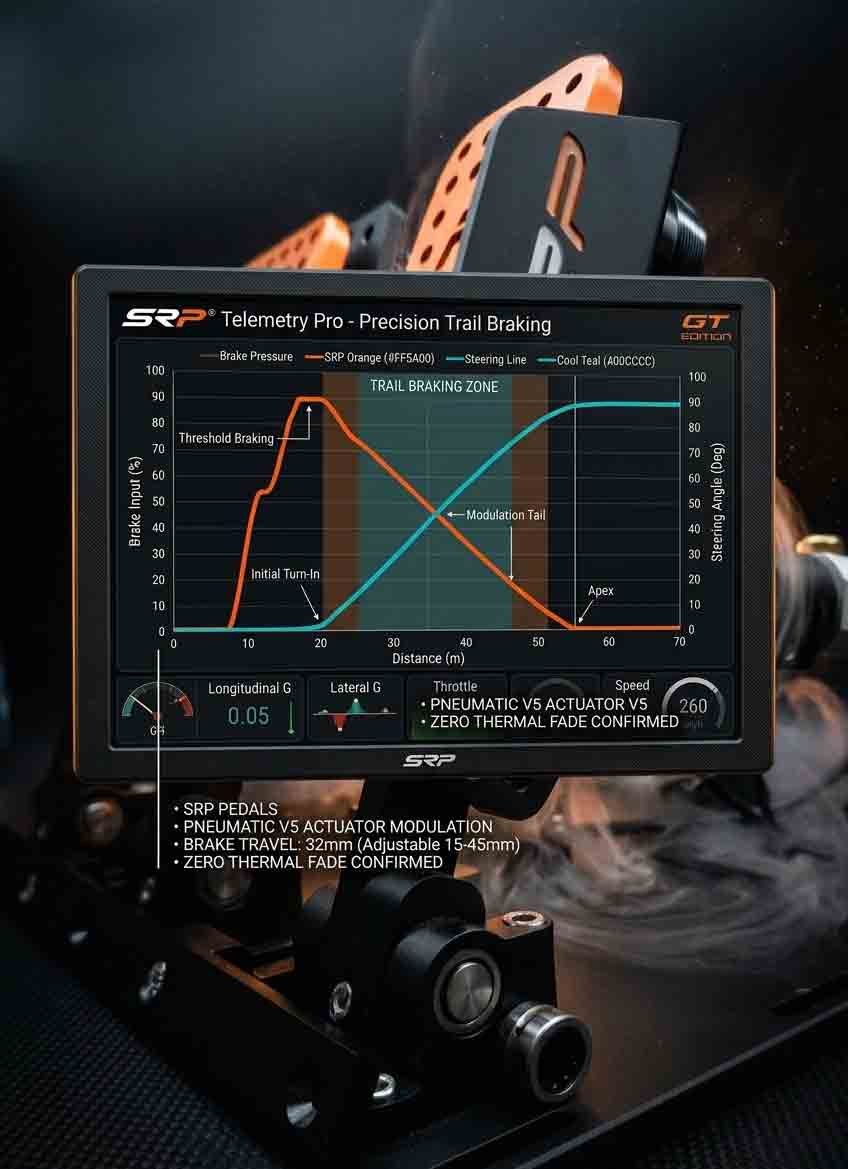
/// TELEMETRY ANALYSIS: RELEASE PHASE MODULATION
/// The Physics of Pitch Control
Managing Weight Transfer via the Apex
Trail braking involves gradually releasing brake pressure as you turn into a corner. Instead of finishing all your braking in a straight line, you carry a small percentage of pressure (usually 5% to 15%) all the way to the apex.
By keeping the brake slightly engaged, you keep the car’s weight shifted over the front tires, providing maximum grip for rotation. If you release the brake too fast, the nose lifts, the front tires lose load, and you understeer off the track. If you hold too much pressure while turning, you risk locking the inner front tire or inducing snap oversteer.
🏁 PRO TIP
Think of your brake pedal as a dial for the car’s front-end grip. The smoother your release, the more stable your platform remains during the transition from longitudinal to lateral force.
/// The Precision Bottleneck
Why Elastomers Sabotage Your Release Phase
Trail braking requires surgical precision. You must feel the difference between 10% and 12% brake pressure. This is where standard load cell pedals with rubber elastomers fail due to Thermal Fade.
As rubber heats up during a stint, its stiffness changes. If the pedal feels different on lap 10 than it did on lap 2, your brain cannot build the muscle memory required to consistently hold that crucial 10% pressure. You end up guessing, which leads to lock-ups and lost time.
/// The SRP® Pneumatic Advantage
Zero Thermal Fade & Mechanical Regulation
This is why the SRP® GT-S and GT-R pedals utilize the patented R-Piston V5 pneumatic system. Because compressed air does not suffer from thermal degradation, your muscle memory stays locked in from green flag to checkered flag.
Additionally, our ecosystem allows for Brake Pedal Travel Regulation. By adjusting the mechanical stroke between 15mm and 45mm, you can increase the physical window your foot has to modulate the release. This granular control over the car’s pitch is what allows for repeatable, alien-level performance.

/// R-PISTON V5: ADJUSTABLE STROKE DYNAMICS
💬 Paddock FAQ: Trail Braking Technique
Trail braking is an advanced driving technique where you gradually release the brake pedal as you turn into a corner. This keeps the car’s weight transferred over the front tires, maximizing grip and rotation all the way to the apex.
Elastomers suffer from thermal fade as they heat up during a race stint, changing their physical stiffness. This micro-inconsistency destroys your muscle memory, making it nearly impossible to hold the precise 5-10% brake pressure required for perfect trail braking.
The Master’s Arsenal
Master the trail braking phase with professional-grade pneumatic engineering.

SRP® GT-R
The Endurance Master. Engineered for zero thermal degradation during 24h stints. The ultimate tool for consistent braking.
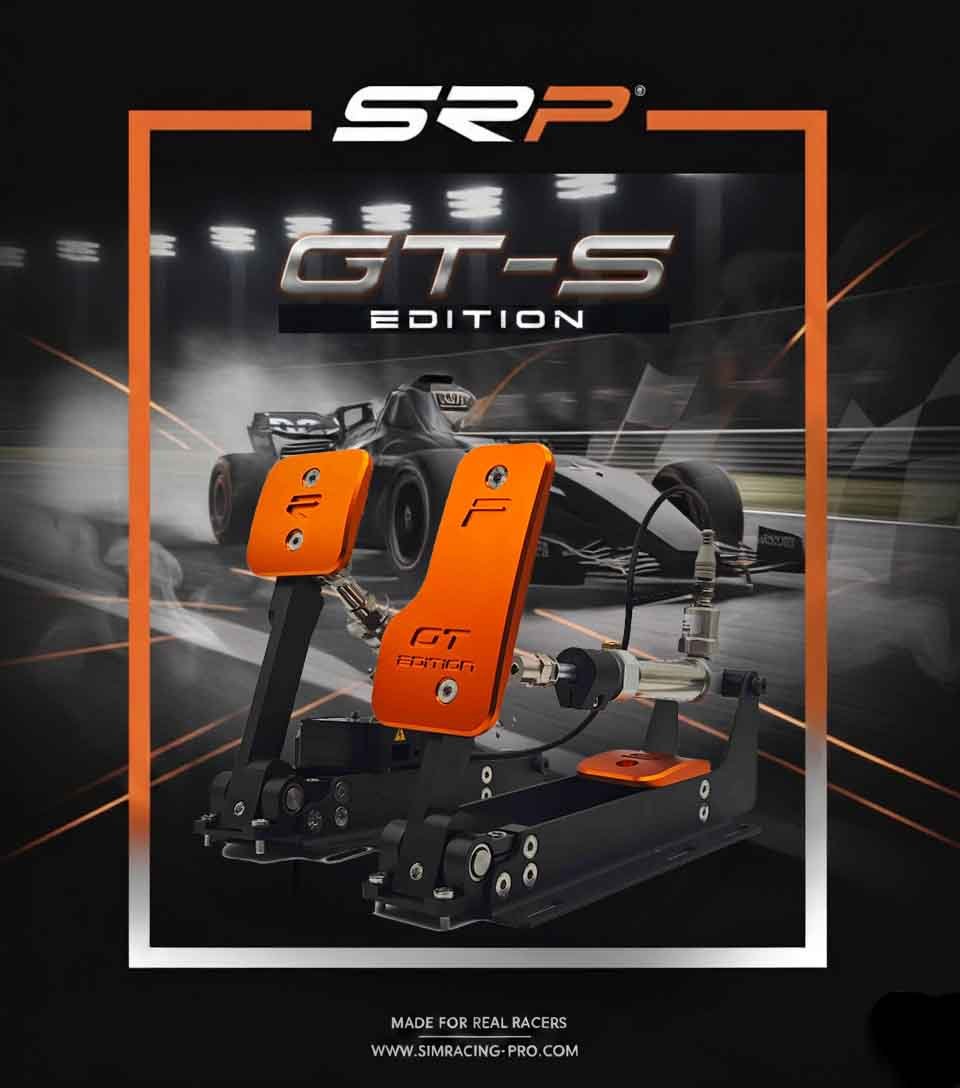
SRP® GT-S
GT3 & Rally Precision. Master every apex with pneumatic linearity and high-speed response. Perfect for technical trail braking.
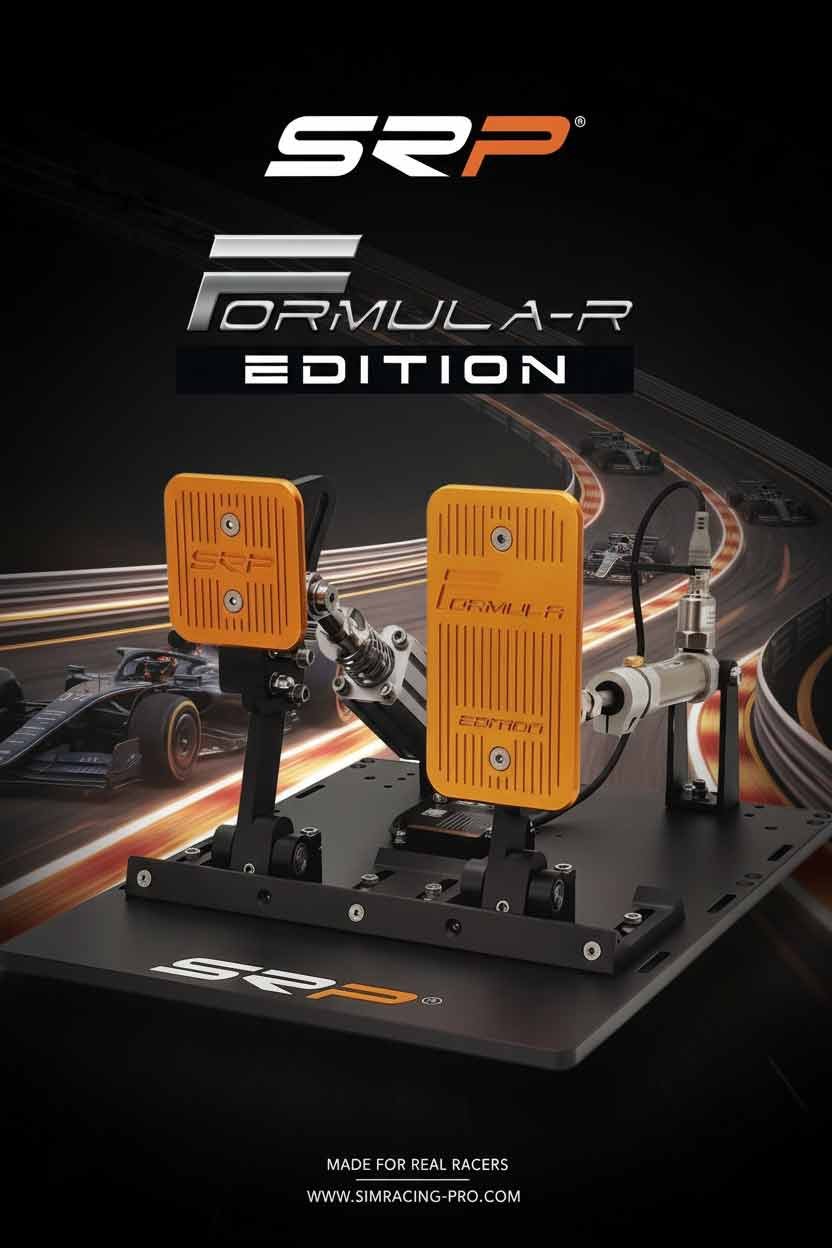
SRP® Formula-R
Ultimate Monocoque Rigidity. Built for high-downforce braking maneuvers with zero mechanical flex.