
COCKPIT
Definition

How Cockpit Impacts Your Lap Times
A rigid cockpit is essential. If the rig flexes under braking, the energy is absorbed by the metal instead of the sensors, destroying telemetry accuracy.
Understanding this concept mathematically is vital. As we explore in our comprehensive racing telemetry guides, driver consistency isn’t just about endless practice; it relies on a flawless understanding of vehicle dynamics and deploying the correct hardware to execute your intent.
💬 Live Paddock: The SimRacing Community is Asking…
We scanned technical subreddits (r/SimRacingTelemetry, r/simracing, r/SimRacingSetups) to see what drivers are struggling with right now regarding Cockpit:
- “How do I analyze my telemetry to improve cockpit?”
- “Are elastomer pedals holding back my cockpit execution?”
- “Why does my rig setup feel inconsistent during long stints regarding cockpit?”
When drivers search for answers to these complex questions, they often blame their own technique or car setup. However, the root cause is almost always an underlying hardware limitation. If your equipment cannot relay consistent physical forces, you cannot solve these issues purely through practice.
The Hardware Disconnect: Solving it with SRP®
Even the best aluminum profile cockpit cannot fix a flexing pedal plate. SRP® pedals feature an integrated aerospace-grade aluminum monocoque that eliminates local flex entirely, translating 100% of your kinetic intent into the simulator.
In high-level eSports and 24-hour endurance events, you cannot afford to rely on equipment that physically degrades or changes properties during a stint. By transitioning to an industrial-grade pneumatic architecture, you ensure that your physical inputs are translated with absolute mathematical perfection, allowing you to master cockpit flawlessly.
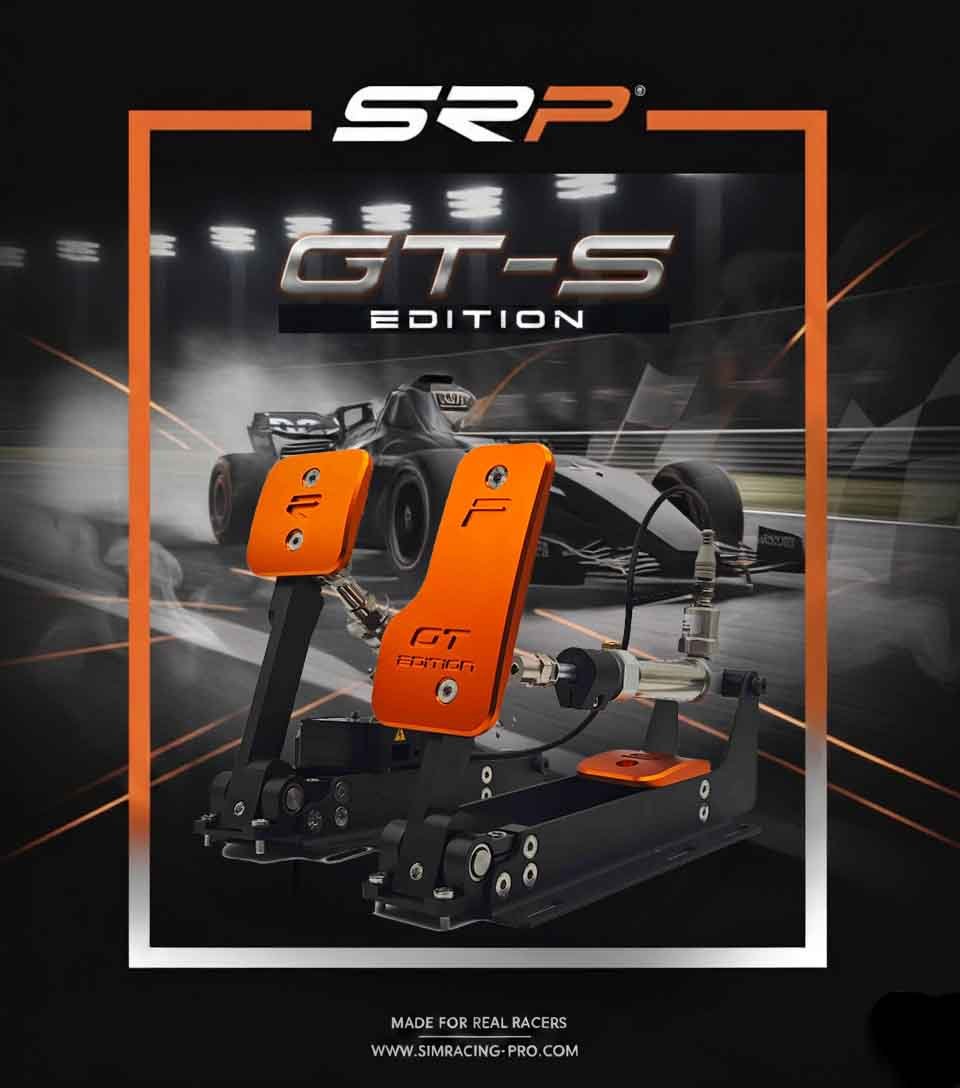
MASTER COCKPIT TODAY
Stop fighting degrading rubber elastomers. Upgrade to the SRP® pneumatic ecosystem and secure your muscle memory with aerospace-grade precision.