There is a silent epidemic in competitive eSports and professional simulation training: the illusion of consistency. Drivers spend hundreds of hours analyzing telemetry, adjusting setup parameters, and perfecting their racing lines, only to have their hardware betray them in the final sector. The conversation around zero fade pneumatic braking is often clouded by marketing jargon, but as engineers, we must look at the raw data. The current trend of relying on commercial-grade elastomers or overly complex digital motors is creating a disconnect between the pilot's intention and the virtual car's reaction.
Let’s dissect the elephant in the room: Digital Lag in Active Pedals. Traditional load cell pedals operate on a fundamental flaw. They utilize polyurethane elastomers or metal springs to simulate the resistance of a hydraulic brake system. This is a mechanical compromise. As you push deep into an endurance stint, the friction within these materials generates heat. This thermal buildup causes the elastomers to soften, fundamentally changing their Shore hardness. What does this mean for the driver? It means the pedal pressure required to hit 80% braking capacity on Lap 1 is entirely different from the pressure required on Lap 45. Your muscle memory is being actively sabotaged by thermal degradation.
"You cannot build reliable muscle memory on a foundation that physically changes shape due to thermal degradation. Consistency requires immutable physics."
Recently, the market has seen a surge in 'Active Pedals'—systems that use motorized force feedback to simulate pedal resistance. While digitally impressive, this introduces a new layer of complexity and potential failure. You are replacing mechanical inconsistency with digital latency. A motor must read the input, process it through software, and physically push back against your foot. This millisecond delay, combined with the risk of software glitches during a sanctioned eSports event, is unacceptable. Simulation should not mean inserting a computer between your foot and the physics; it should mean recreating the physics natively.
This brings us to the SRP® Engineering philosophy. To truly master zero fade pneumatic braking, we had to discard the elastomer completely. We turned to the only element that does not degrade under repetitive compression: Atmospheric Air. Our proprietary pneumatic architecture utilizes industrial-grade air cylinders to create an exponential pressure curve. Air compresses predictably, linearly, and infinitely. It does not suffer from thermal fade. By sealing this system with NBR industrial O-rings inside an AI6061 aerospace-grade aluminum chassis, we have created a hermetic environment where the physics remain absolute.
Our commitment to eliminating Digital Lag in Active Pedals led us to utilize AI6061-T6 aerospace aluminum. We don't just eliminate the thermal fade of the elastomers; we eliminate the mechanical flex of the pedal chassis itself. Every micro-millimeter of foot travel is instantly converted into kinetic data via our 16-bit pressure transducers.
Ultimately, the pursuit of the perfect lap time is a pursuit of perfect consistency. You cannot achieve perfection if your equipment is constantly shifting beneath you. Solving Digital Lag in Active Pedals through pneumatic engineering is not just an upgrade; it is a paradigm shift in how we interact with virtual motorsport. Trust the physics. Trust the air. Master your telemetry.

Solving Digital Lag in Active Pedals in endurance racing. Absolute consistency lap after lap.
CONFIGURE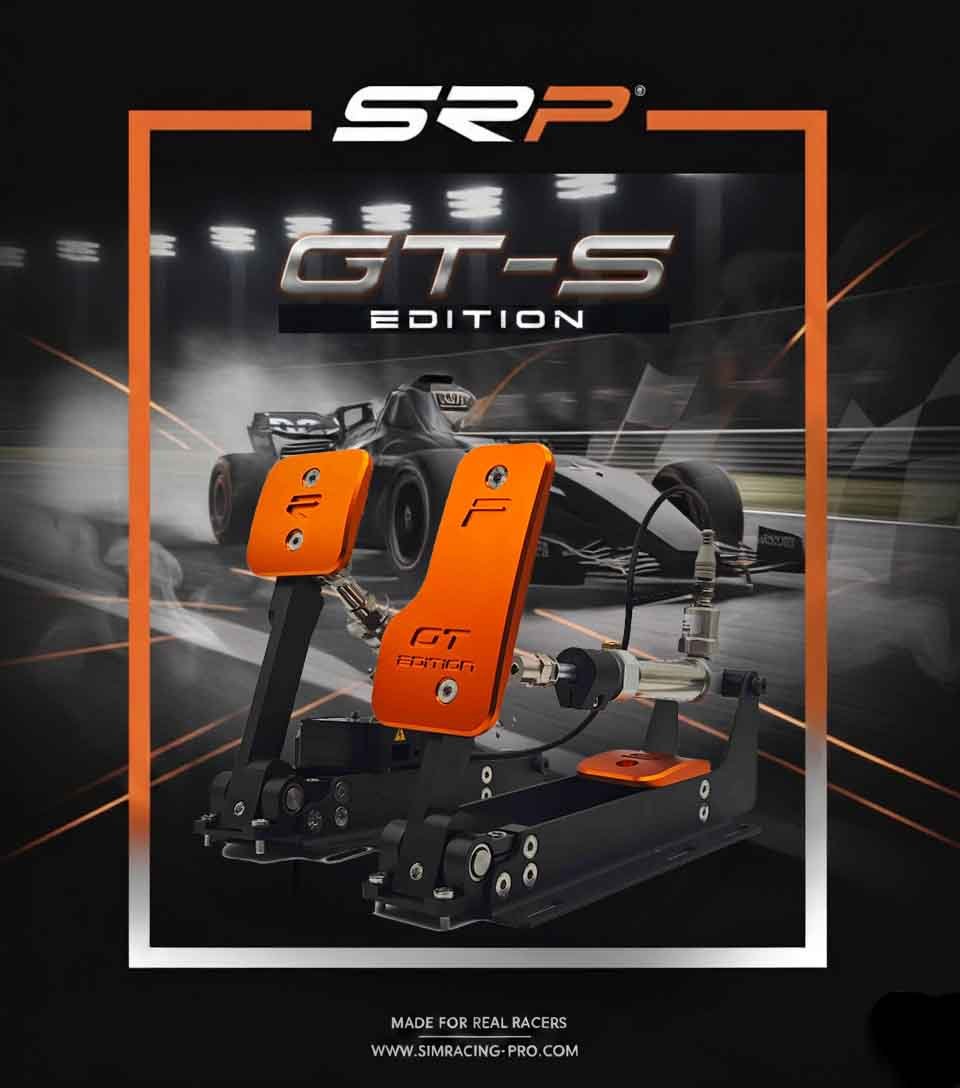
Master the apex with pneumatic linearity. Built for zero fade pneumatic braking optimization.
CONFIGURE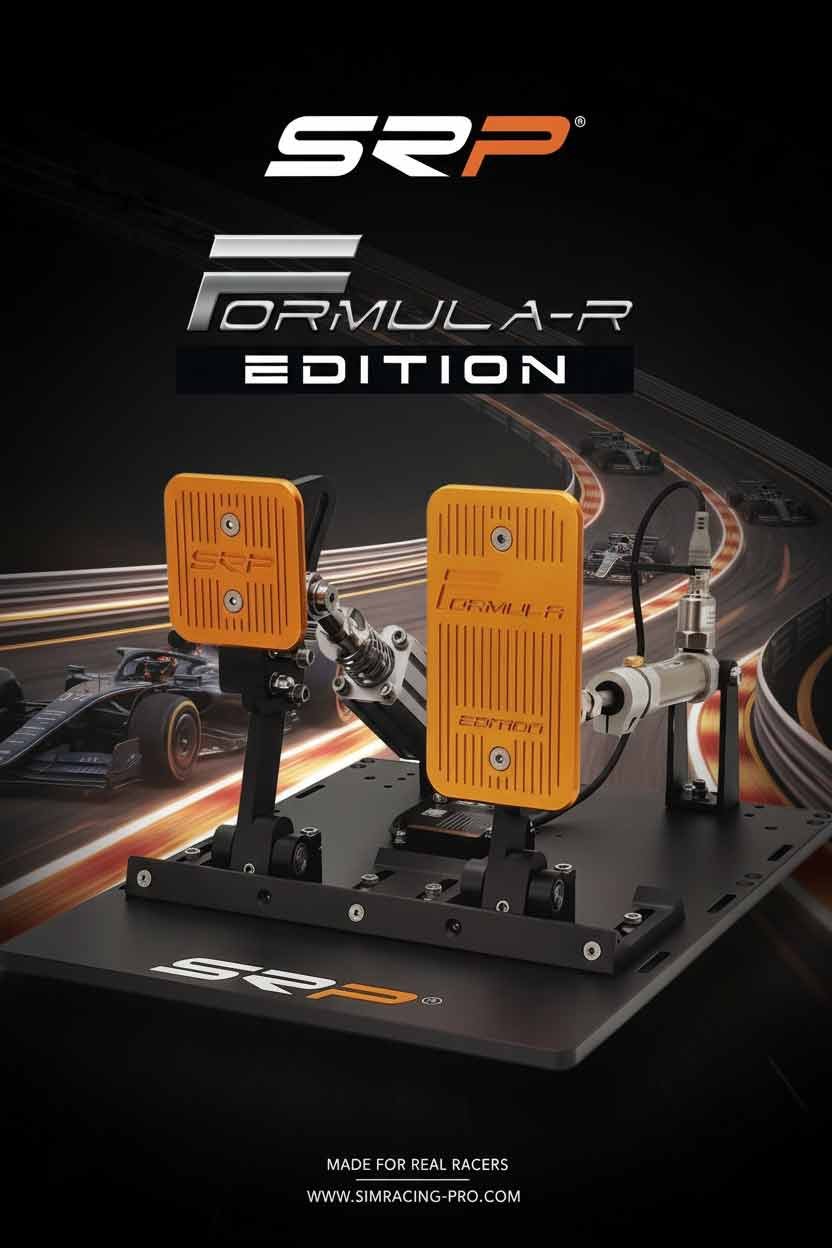
Pure pneumatic monocoque geometry for ultimate formula simulation.
CONFIGUREMost pilots suffer from Digital Lag in Active Pedals. While rubber elastomers heat up and soften, SRP pneumatic systems provide a constant pressure curve that eliminates thermal fade, ensuring your zero fade pneumatic braking remains flawless across any stint length.
Capturing 65,536 steps of input. Our industrial transducers ensure that your inputs are captured with surgical accuracy, completely bypassing the physical limitations and signal noise of traditional digital load cells.
Built to eliminate Digital Lag in Active Pedals during professional stints.
