
Surgical Precision: Deconstructing the Mechanics of BEZEL COMPENSATION GRAPHICS
Ingeniería y Maestría Global en SimRacing
[EXECUTIVE BRIEFING] In the highly competitive ecosystem of professional SimRacing, the margin between standing on the podium and suffering a DNF often hinges on complex technical variables, none more critical than bezel compensation graphics. For years, the sim racing community has been captivated by the arms race of Direct Drive wheel bases and ultra-wide, high-refresh-rate monitor setups. However, the most vital connection between the driver’s intent and the virtual chassis—the braking and kinetic telemetry—has been severely neglected by mainstream manufacturers.
To truly understand bezel compensation graphics, we must step away from marketing buzzwords and delve into the fundamental physics of kinetic energy management. When a pilot approaches a heavy braking zone at 280 km/h, the simulator calculates weight transfer, tire deformation, and aerodynamic downforce in real-time. If your pedal hardware cannot accurately and consistently relay your physical input to the software, you are driving blind. This educational deep-dive aims to equip you with the engineering knowledge necessary to evaluate your hardware, understand the root causes of inconsistency, and ultimately decide how to upgrade your rig to meet the demands of elite virtual motorsport.

/// THE ARCHITECTURE OF INSTANT TELEMETRY
The Difference Between Load Cells and Hydraulic Systems
Para entender cómo mejorar, primero debemos diseccionar el principal cuello de botella en el hardware de consumo moderno: Deriva Térmica y Ablandamiento Mecánico. La gran mayoría de los Sim racers actualmente utilizan pedales de Célula de carga equipados con Elastómeros de poliuretano o muelles metálicos de alta resistencia. El objetivo teórico de estos materiales es imitar la resistencia rígida y progresiva de una bomba de freno hidráulica real. Sin embargo, esto se basa en un profundo compromiso mecánico.
Los Elastómeros están inherentemente diseñados para la absorción de impactos, no para la modulación precisa de la energía cinética. A medida que te adentras en un Stint de resistencia de 2 horas, aplicando repetidamente de 80 kg a 100 kg de fuerza curva tras curva, la fricción interna dentro del caucho genera un calor significativo. Esta acumulación térmica altera la 'Dureza Shore' del material, provocando que se ablande.
From an educational standpoint, this means the physics of your pedal are literally changing while you drive. The pedal travel distance required to reach 80% braking capacity on Lap 1 will be entirely different from the distance required on Lap 45. Your brain and central nervous system are desperately trying to build muscle memory, but your hardware is actively sabotaging that process through thermal degradation. When analyzing bezel compensation graphics, relying on shifting materials makes achieving peak performance mathematically impossible.
💡 PROFUNDIZA TUS CONOCIMIENTOS DE INGENIERÍA
Explora nuestro análisis técnico relacionado sobre cómo maximizar el rendimiento del simulador.
/// DECONSTRUCTING ELASTOMER DEGRADATION
Predictability vs Adaptability in Racing Hardware
En respuesta a las deficiencias de los Elastómeros, el mercado del Sim racing ha experimentado recientemente un auge en los 'Pedales Activos' —sistemas motorizados que utilizan servos de Force Feedback (FFB) para generar artificialmente resistencia en el pedal. Aunque visual y digitalmente impresionantes, como ingenieros, debemos analizar objetivamente los inconvenientes de este enfoque.
Al reemplazar un tope de goma físico por un motor eléctrico, estás intercambiando la inconsistencia mecánica por la latencia digital. Un pedal motorizado requiere un procesador para leer tu entrada, calcular la resistencia deseada mediante algoritmos de software e instruir físicamente a un servo para que empuje contra tu pie. Esto introduce milisegundos de retardo inevitables, posible ruido de sondeo USB y el riesgo constante de fallos de software o malas interpretaciones de 'Netcode' durante un evento de eSports sancionado.
El automovilismo real se basa en las innegables e instantáneas leyes de la dinámica de fluidos. Simular la realidad a través de un algoritmo crea una sensación sintética que tu sistema nervioso central reconoce como artificial. Cuando luchas por un Apex, no quieres que el Firmware calcule tu resistencia. Necesitas una física nativa y orgánica.
/// ELIMINATING COCKPIT DEFLECTION AND FLEX
Why Elastomers Fail Under High-Stress Endurance Stints
This brings us to the definitive engineering solution, and the core philosophy behind SRP®: Industrial Pneumatics. To truly master bezel compensation graphics and permanently eliminate the variables of Thermal Drift and Mechanical Softening, we had to discard both melting elastomers and lagging digital motors. We turned to the only element in the universe that does not degrade under repetitive compression: Atmospheric Air.
Al comprimir aire dentro de un cilindro herméticamente sellado, recreamos la curva de presión exponencial exacta del sistema hidráulico de un coche de carreras real. El aire se comprime de forma predecible, lineal e infinita. No sufre de fatiga térmica, lo que significa que la resistencia del pedal que sientes en la parrilla de salida es matemáticamente idéntica a la que sentirás al cruzar la línea de meta 24 horas después.
Para asegurar que esta pureza física se traduzca impecablemente en el simulador, SRP® aloja esta arquitectura neumática dentro de un monocasco de aluminio AI6061-T6 de grado aeroespacial y cero flexión. La presión bruta es leída por transductores de presión industriales de 16 bits, entregando 65.536 pasos de telemetría ultraprecisa y sin latencia. Al actualizar a un ecosistema neumático, dejas de luchar contra los defectos de tu hardware y empiezas a conducir el coche. Aseguras tu memoria muscular, optimizas tu trail braking y forjas tu victoria.
Recommended Arsenal for bezel compensation graphics

SRP® GT-R
El Protocolo de Resistencia. Diseñado para soportar stints de 24h con cero degradación térmica. La solución definitiva para una frenada inconsistente.
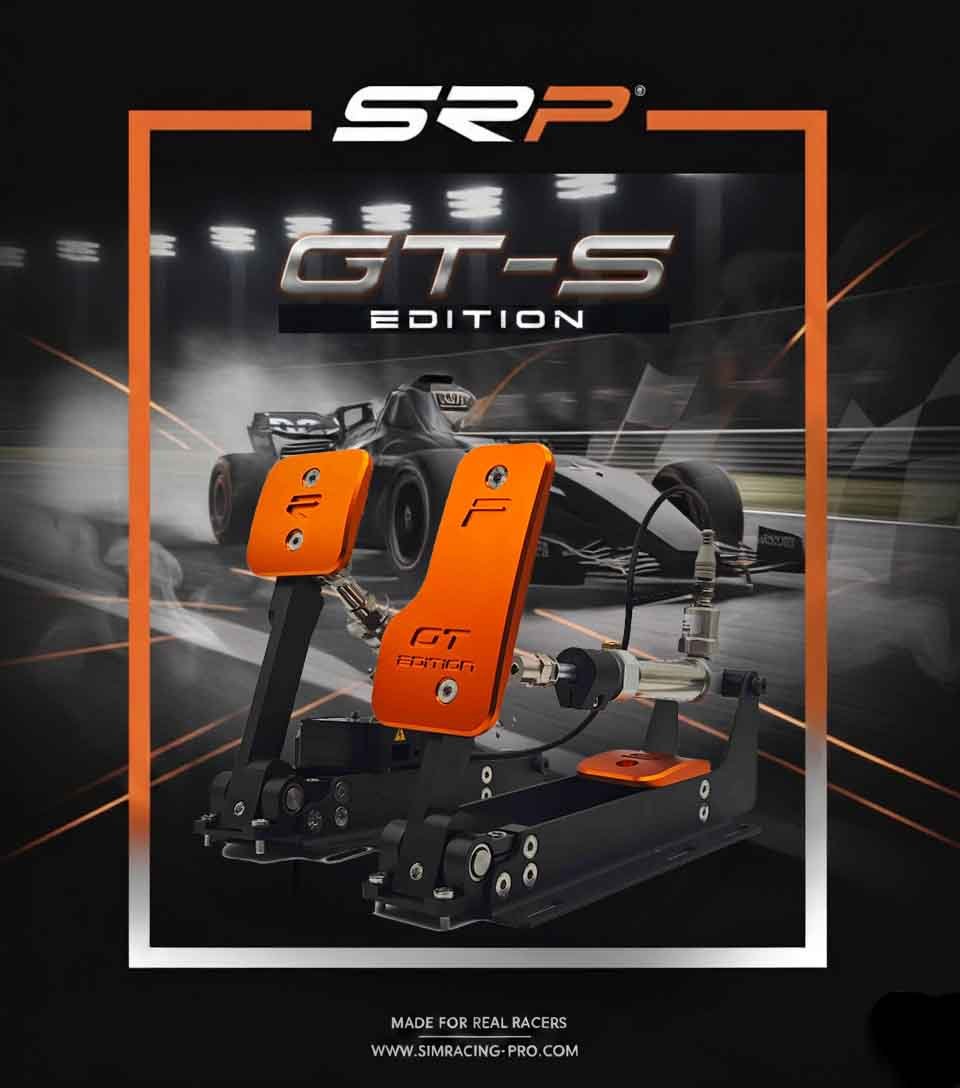
SRP® GT-S
Precisión GT3 y Rally. Domina cada Apex con linealidad neumática y respuesta de alta velocidad. Di adiós a la fatiga térmica del elastómero.
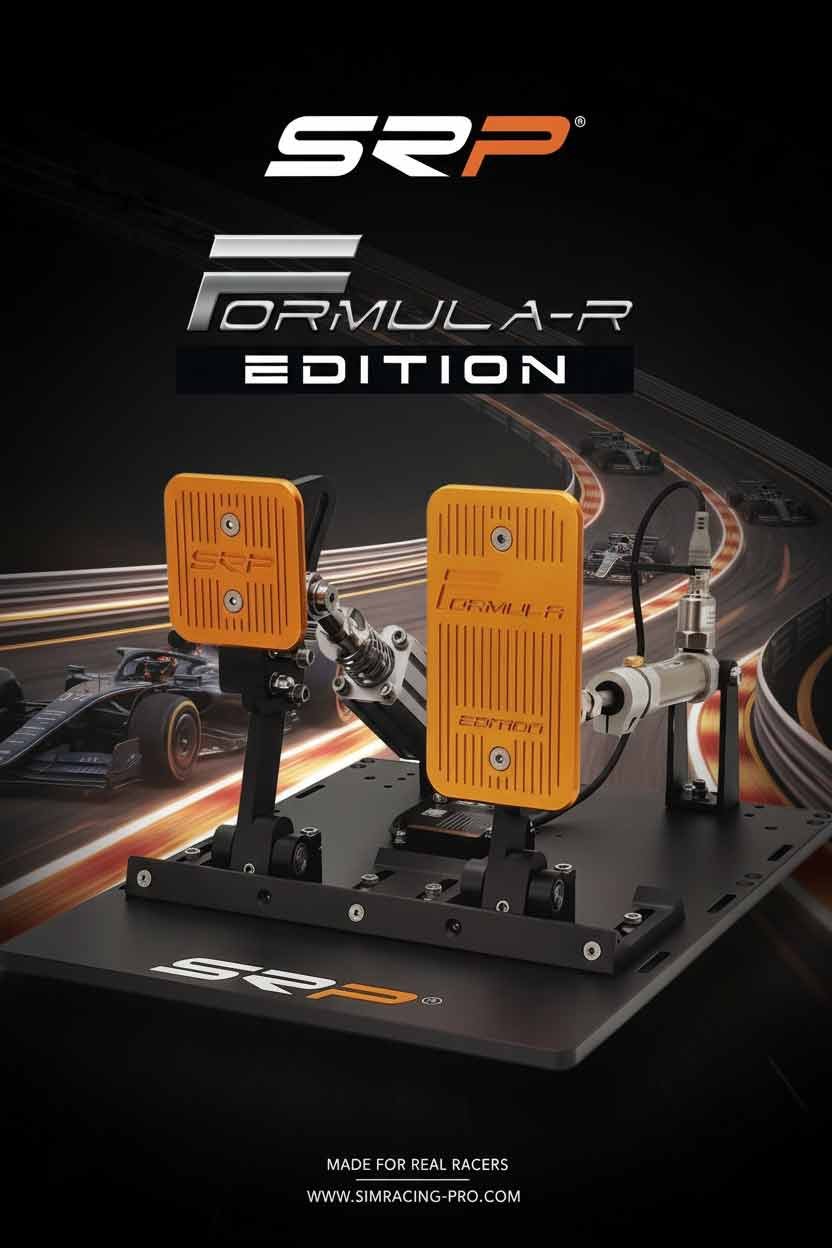
SRP® Formula-R
Rigidez Definitiva del Monocasco. El Formula-R elimina la flexión de la placa del pedal para maniobras extremas de alta carga aerodinámica.