
The Hidden Cost of Hydraulic Sim Racing Pedals
[EXECUTIVE BRIEFING] The pursuit of absolute realism often leads drivers to consider hydraulic pedals. The logic is sound: real GT3 and Formula cars use hydraulic brake systems. However, there is a critical factor often omitted in buyer’s guides: hydraulic sim racing pedals maintenance.
Running a liquid-based fluid system in a home simulator introduces mechanical vulnerabilities that sim racers shouldn’t have to manage. Modern high-end rigs are rapidly transitioning toward a cleaner, maintenance-free pneumatic alternative that replicates the same physics without the liquid liability.
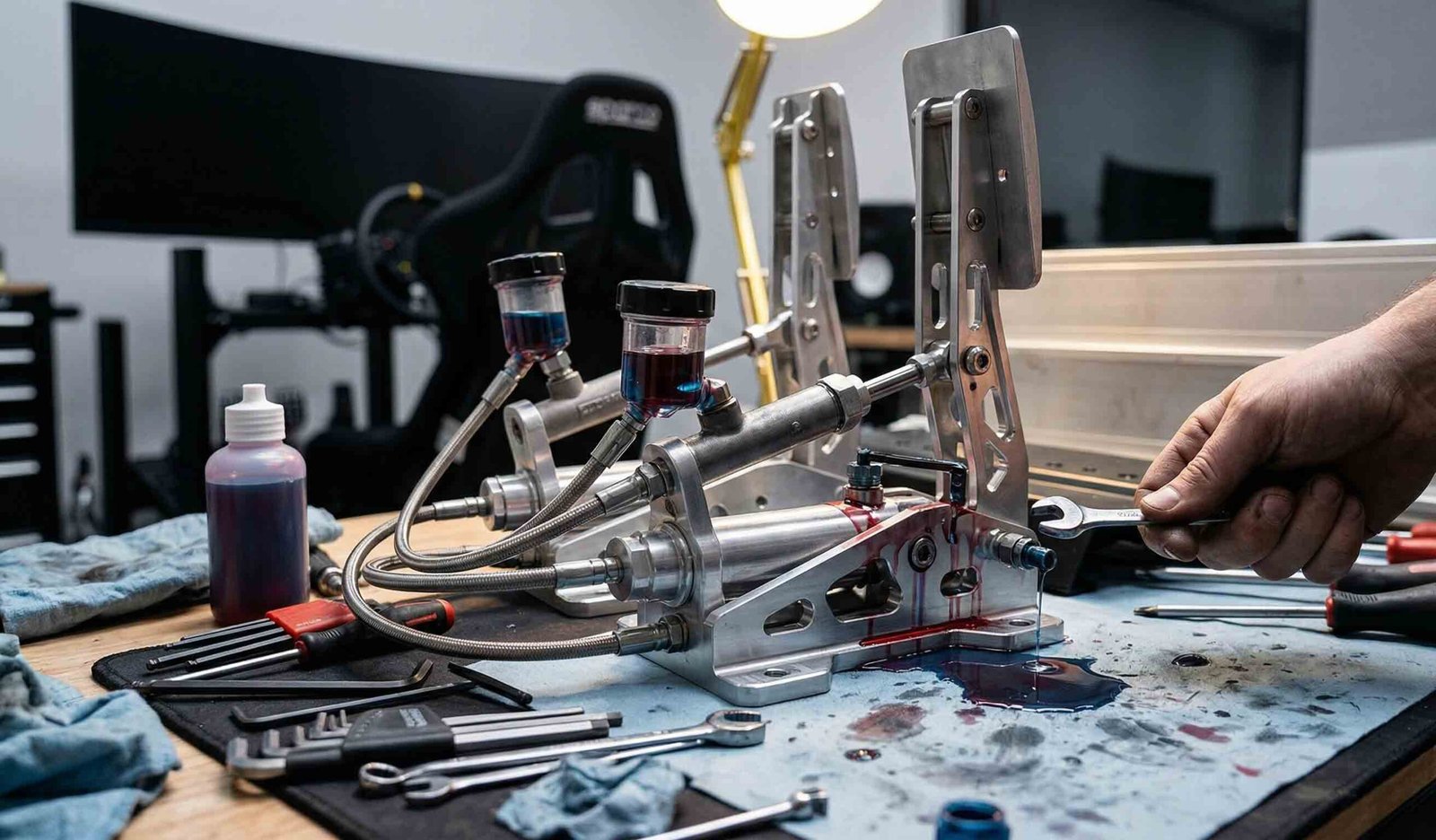
/// SYSTEM AUDIT: LIQUID HYDRAULIC VULNERABILITIES
/// The Reality of Liquid Hydraulics
1. The Inevitability of Bleeding
Over time, microscopic air bubbles enter liquid systems through the seals as the piston cycles millions of times. This results in a “spongy” and inconsistent brake feel. To fix this, you must bleed the system—a messy, time-consuming task involving reservoirs and old oil.
2. Dust, Seals, and Micro-Leaks
Unlike a race car in a controlled garage, a sim rig sits in a room with dust and carpet fibers. As the rod retracts, it pulls debris past the seals. Once a seal is compromised, fluid will eventually seep out, risking damage to your floors and nearby electronics.
⚠️ Engineering Risk
Automotive hydraulic components are designed for regular rebuilds by professional mechanics. In a sim racing environment, they represent a high-maintenance bottleneck for the casual and professional user alike.
/// The Fluid Dynamics Solution
Air is a Fluid: Replicating the Brake “Wall”
By engineering a completely sealed, high-pressure air cylinder, you can replicate the exact mathematical resistance curve of a hydraulic system without using a single drop of liquid. This is the foundation of Pneumatic Sim Racing Pedals.
Our patented R-Piston V5 uses compressed air housed within an aerospace-grade AI6061 aluminum monocoque. You get the exponential, authentic bite of a real GT3 master cylinder, combined with the “plug and play” reliability of a solid-state electronic device.
/// Frequently Asked Questions
Do pneumatic pedals feel exactly like hydraulic pedals?
Yes. Both operate on the principles of fluid dynamics. The exponential ramp-up in resistance mimics a hydraulic master cylinder perfectly, providing the same authentic “wall” of pressure without the thermal fade found in elastomers.
Will I ever need to add air to SRP® pneumatic pedals?
No. The SRP® R-Piston V5 is a closed, self-contained system. The air is permanently trapped using industrial NBR seals designed to last for millions of cycles without requiring refills or service.
Why do some brands still use hydraulics?
Hydraulics use readily available automotive parts. Engineering a flawless, leak-proof pneumatic system requires custom-machined parts and proprietary patents, which is a significantly more complex manufacturing route.
The Maintenance-Free Arsenal
Experience true fluid dynamics with zero maintenance.

SRP® GT-R
The Endurance Master. Engineered for zero thermal degradation during 24h stints. Replicating hydraulic feel without the leaks.
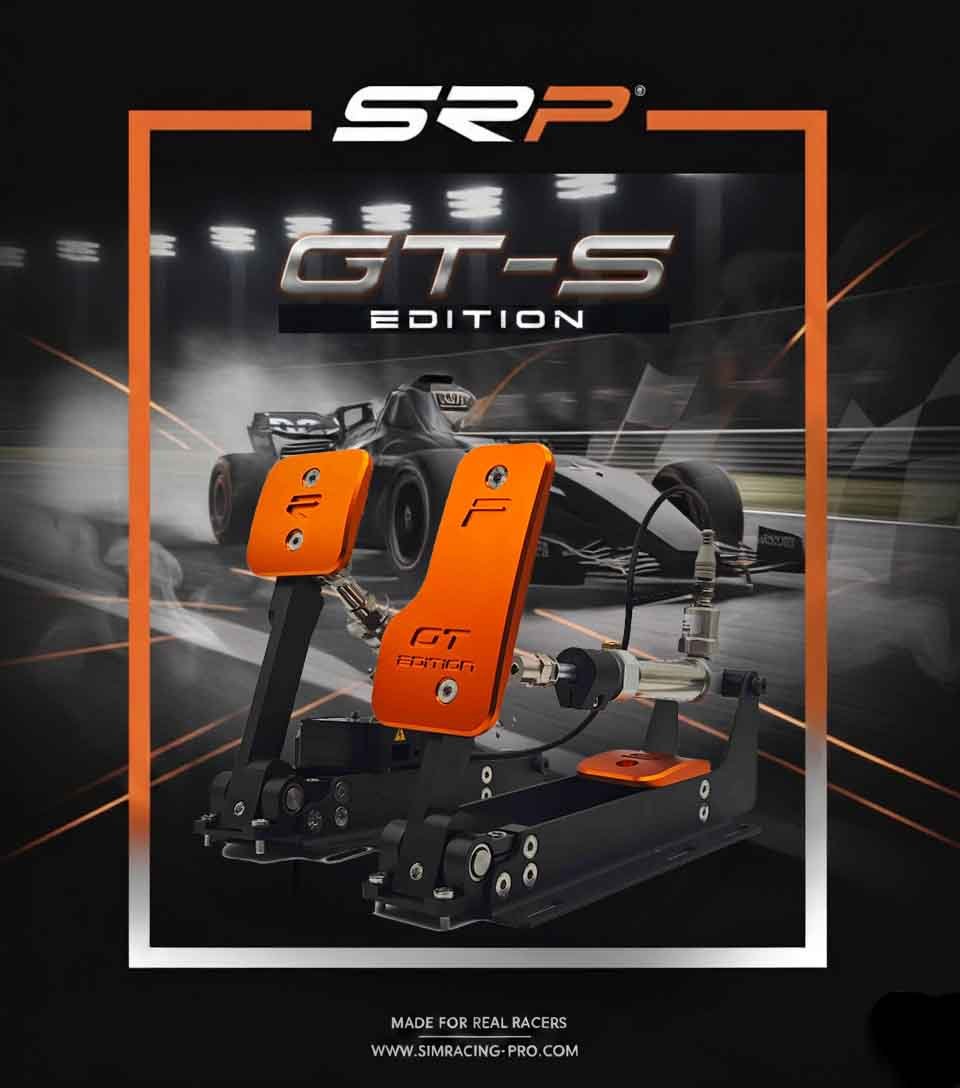
SRP® GT-S
GT3 & Rally Precision. Master every apex with pneumatic linearity. Certified for over 3.5 million kilometers of maintenance-free racing.
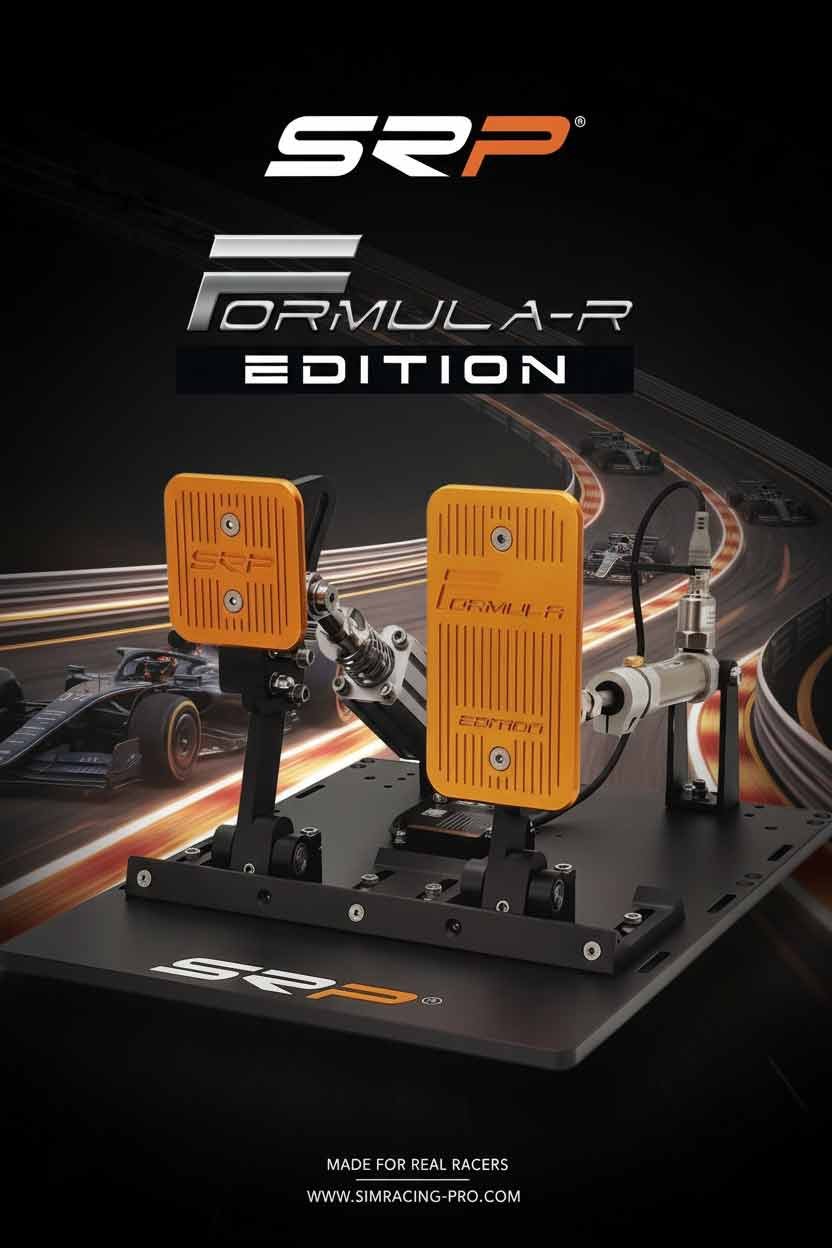
SRP® Formula-R
Ultimate Monocoque Rigidity. The pinnacle of pneumatic engineering for high-downforce, high-pressure braking.