
Sim Racing Pedals: Engineering the Ultimate Pneumatic Ground Truth
Biomechanical Calibration UI & Aerospace Kinematic Infrastructure
For professional motorsport drivers and elite simulator pilots, the cockpit interface is not a matter of immersive gaming—it is a critical data acquisition window. In modern competitive simulation, races are won or lost under braking. Maximizing vehicle rotation, stabilizing the aerodynamic pitch, and hitting the precise deceleration threshold demands a hardware interface that communicates with absolute physical fidelity.
While the simulation market has traditionally settled for mass-produced load cell setups, drivers transitioning from actual GT3, LMP, or open-wheel machinery instantly encounter a fundamental limitation: structural and behavioral degradation. True consistency requires a paradigm shift from basic pressure measurement to real atmospheric compression.
/// The Polyurethane Problem: Elastomer Hysteresis
Why Conventional Load Cell Pedals Fail the Endurance Test
To understand the necessity of pneumatic technology in high-end sim racing pedals, one must analyze the raw physics of standard load cell units. Conventional setups calculate stopping force via a static strain gauge, relying completely on a stack of rubber or polyurethane elastomers to deliver mechanical resistance. This structural reliance introduces an engineering flaw known as thermal degradation or fading.
During a rigorous race session, continuous, high-pressure compression cycles generate localized friction and internal heat within the elastomer core. As temperature climbs, the polymer structure experiences a dramatic drop in its Shore hardness profile. The material softeners change dynamically mid-stint.
The result is a direct threat to your competitive performance: under identical force application, the brake pedal travels deeper on lap 30 than it did on lap 2. This subtle physical shift disrupts your biological muscle memory mapping, resulting in inconsistent telemetry trails, untimely front-axle lockups, and unforced track limit penalties.
| Telemetry Metric | Standard Elastomer Load Cell | SRP® Pneumatic R-Piston System |
|---|---|---|
| Structural Resistance Curve | Non-linear, variable under thermal stress | Immutably constant pneumatic gas compression |
| Thermal Fading Degradation | High (Polymer softening after 30+ minutes) | Absolute Zero (Sealed atmospheric chamber) |
| Mechanical Deflection / Flex | Common under steel sheet chassis designs | 0.00% Deflection (Solid Al6061 Monocoque) |
| Data Acquisition Resolution | Standard 12-bit to 14-bit signal processing | Ultra-high fidelity 16-bit sensor processing |
/// Pneumatic R-Piston Engineering
The Atmospheric Solution to Immutable Brake Fidelity
SRP® engineering completely discards variable chemical polymers. Our high-fidelity braking units utilize a proprietary sealed pneumatic chamber powered by our R-Piston infrastructure. Instead of squeezing degrading rubber components, your muscle memory works against a stable, compressed column of atmospheric gas.
The physical properties of gas laws remain perfectly predictable under ambient simulator constraints. This architecture guarantees a completely static performance index: the mechanical resistance path profile remains perfectly uniform whether you are executing a qualifying lap or holding defensive position at the 24th hour of an endurance event. We call this engineering truth Zero Thermal Fade.
/// Mechanical Rigidity: The Al6061 Monocoque
Eradicating Micro-Flex for Purity of Signal
Even the most sophisticated pneumatic pressure chamber becomes inefficient if the structural chassis backing it yields under stress. When a driver applies maximum emergency threshold pressure—frequently exceeding 100kg of localized human force—substandard steel plate or low-density cast frames exhibit minor structural flexing.
This structural deflection absorbs kinetic energy and dampens the signal profile sent to the sensor array. SRP® instruments are entirely machined out of raw, solid blocks of Al6061-T6 aerospace-grade aluminum utilizing ultra-precise, multi-axis CNC manufacturing stations. Our monocoque layout achieves zero mechanical chassis deflection. Every single ounce of force applied by the driver's heel transforms directly into high-fidelity data, ensuring the cleanest trail braking modulation signal possible.
/// LIVE PADDOCK DATABANK // TECHNICAL COMPLIANCE
/// Biomechanical Calibration Infrastructure
Every professional driver exhibits unique physical traits and seating constraints. The SRP® hardware configuration features extensive customization matrices. Drivers can adjust travel distance, alter early-stage progression curves, configure initial preload thresholds, and infinitely manipulate pedal face angles. Backed by ultra-responsive data acquisition chips, our hardware feeds high-density telemetry streams directly to your simulation platform, establishing a direct link between human intent and machine execution.
/// TECHNICAL ARSENAL DEPLOYMENT
Integrate industrial pneumatic performance. Choose your spec platform.

SRP® GT-R
The Endurance Icon. Engineered to withstand relentless 24-hour stints with absolutely zero thermal fade. Built for ultimate multi-stint reliability.
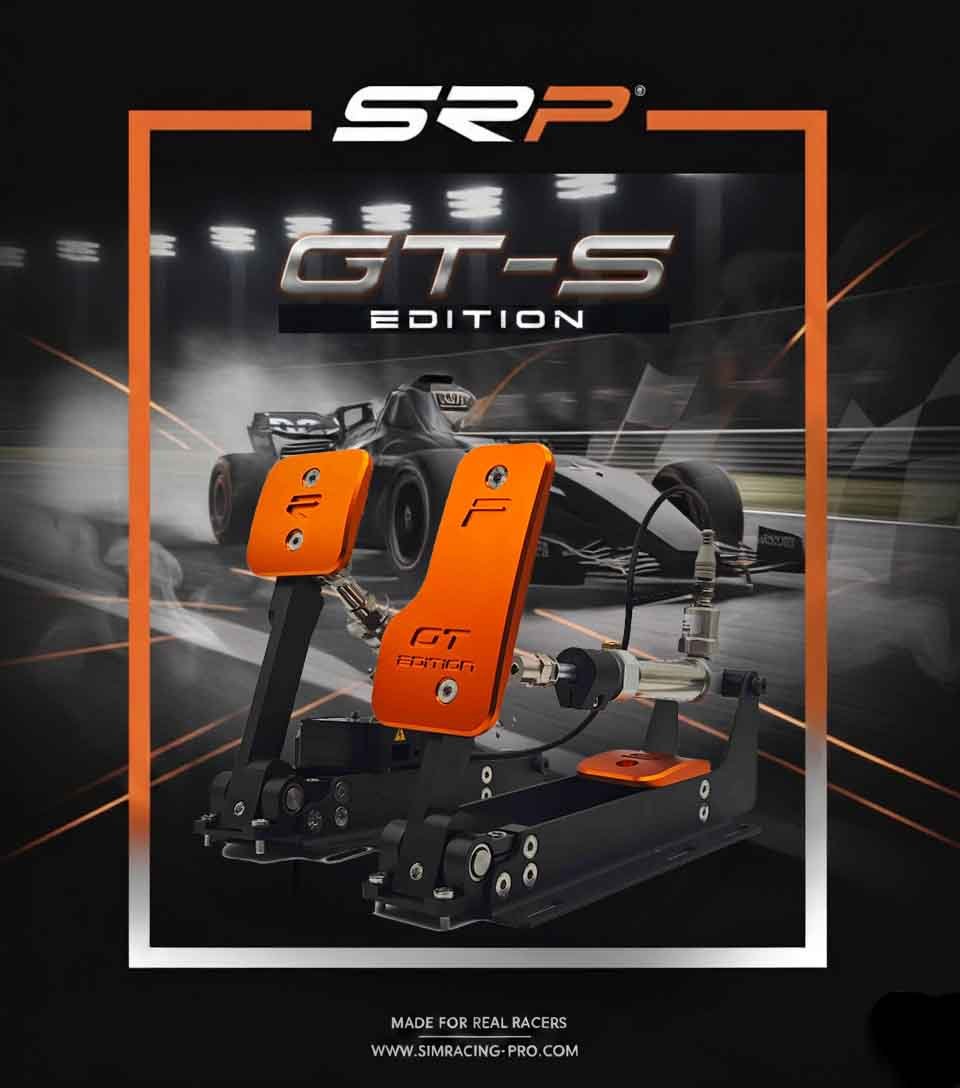
SRP® GT-S
Surgical precision optimized for GT3, GT4, and extreme Rally profiles. Master complex apex entries with immaculate pneumatic linearity.
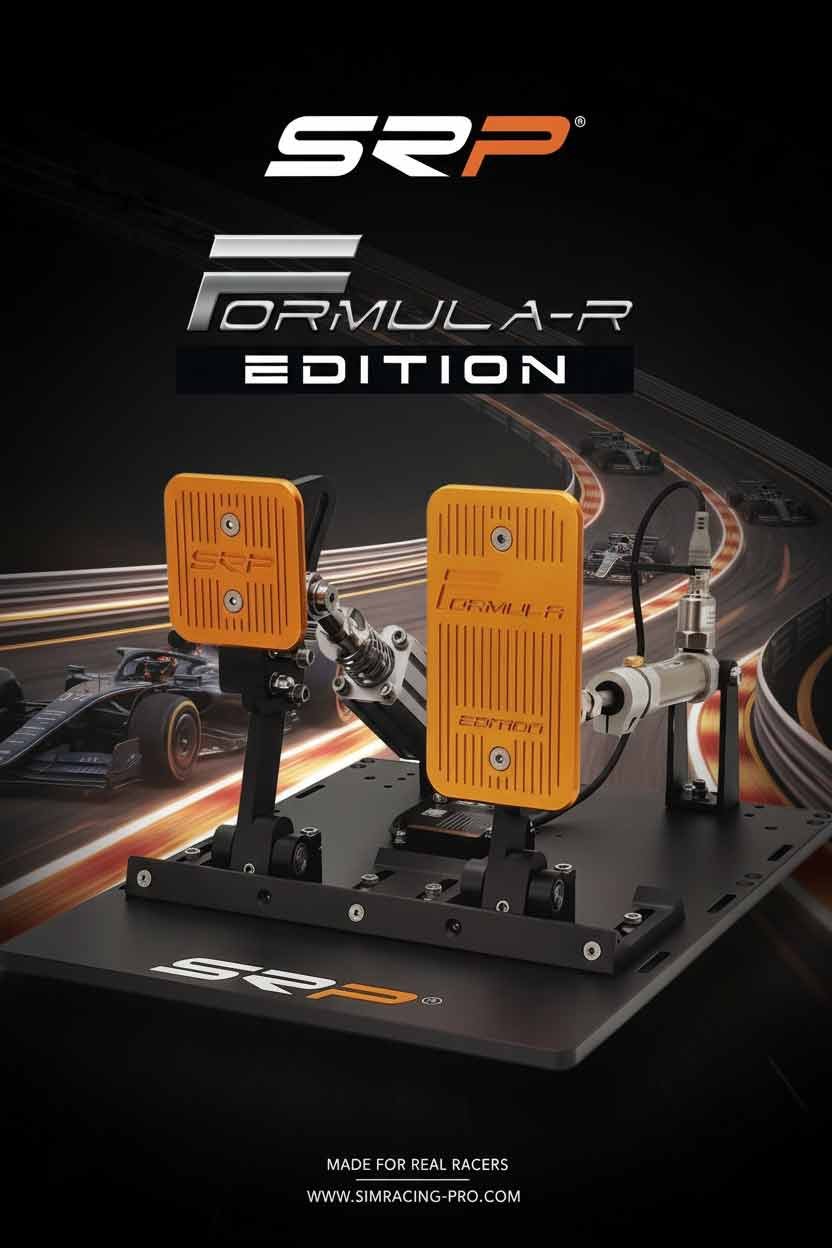
SRP® Formula-R
Monocoque structural rigidity engineered specifically for ultra-high downforce open-wheel environments. Zero flex under extreme load profiles.