
Direct Drive (DD)
The wheel base technology that deleted everything between the simulator and your hands. What Direct Drive is, why it changed sim racing forever — and how many Nm you actually need.
Definition
What Sits Between the Signal and Your Hands
Every FFB signal travels a chain: physics engine → signal → mechanism → your hands. In gear-driven bases the signal passes through plastic gears; in belt bases, through a rubber belt. Each step filters, delays and softens. Direct Drive removes the mechanism entirely — the wheel is the motor shaft:
| Drive type | Between you and the motor | Latency | Fine detail | Feels like |
|---|---|---|---|---|
| Gear-driven | Plastic gears | High | Lost in the meshing | Notchy, “stepped” |
| Belt-driven | Rubber belt + pulleys | Medium | Smoothed away | Soft, vague edges |
| Direct Drive | Nothing | ~Zero | All of it | The virtual car itself |
This is why professional racing drivers accept simulators as training tools: a good DD base reproduces the steering forces of a real race car closely enough to build real muscle memory.
Nm Is Headroom, Not Strength
The most misunderstood spec in sim racing. The Nm figure is the motor’s ceiling — the maximum force it can reproduce before the signal clips. You rarely drive at the ceiling: a 20 Nm base typically runs its GT cars at 8–12 Nm. What the extra headroom buys is detail without clipping at realistic forces — the same lesson as our FFB Signal Lab: more strength badly calibrated is worse than less strength perfectly calibrated.
Interactive Lab — What Each Nm Level Feels Like
The Nm Explorer
Drag the torque and see what each level actually delivers: what you feel, who it is for, and how much of the simulator’s detail survives to your hands.
An Honest Word: Wheel First, or Pedals First?
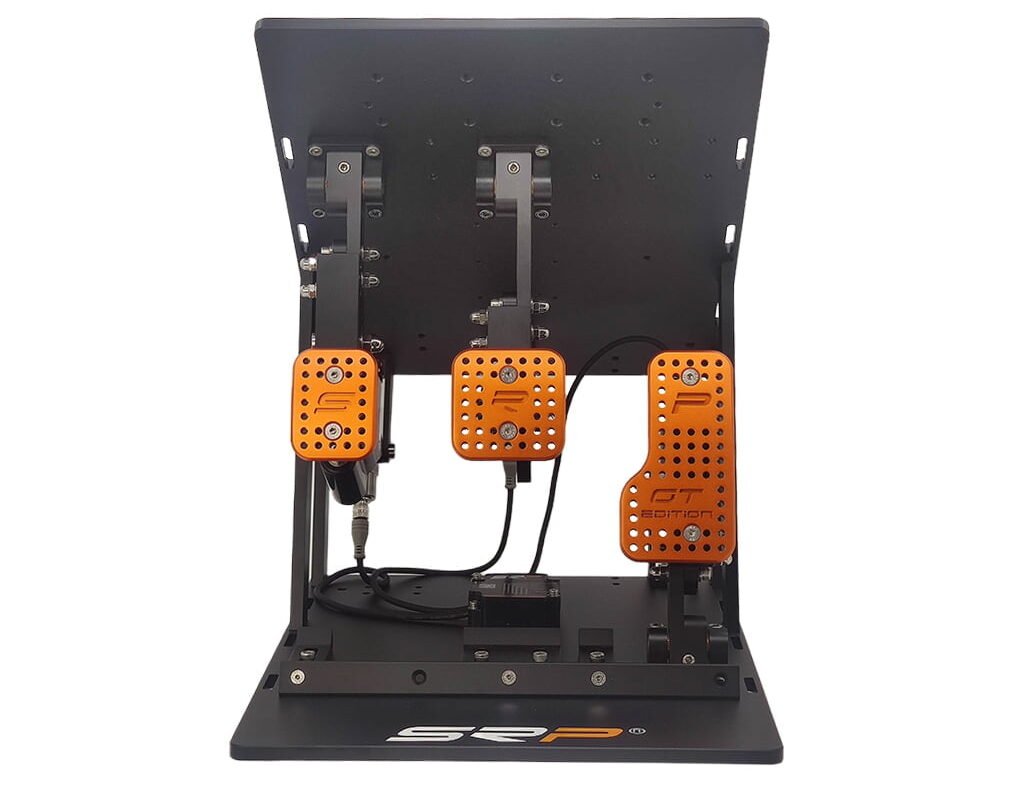
DD upgrades what your hands know about the car. But lap time is decided by what you do about it — and that happens overwhelmingly on the brake pedal. In our experience building hardware with professional drivers, a mid-range wheel plus a truly consistent pressure-based brake beats a top-tier DD base plus a potentiometer pedal, every single stint. The wheel tells you about the car; the brake decides the corner. We break the full argument down in Force Feedback in pedals: active vs passive.
💬 Frequently Asked Questions
What is direct drive in sim racing?
A wheel base where the motor shaft connects directly to the steering wheel, with no gears or belts in between. The FFB signal reaches your hands with zero latency and zero filtering — the most faithful reproduction of what the physics engine calculates.
How many Nm do I need for sim racing?
5–8 Nm covers most club racers with full detail and zero clipping. 10–15 Nm is the esports standard with headroom for realistic GT forces. Beyond 16 Nm you are buying fidelity and headroom, not strength — most drivers never run those bases at full power.
Is direct drive worth it over a belt-driven wheel?
If you race regularly, yes. The jump from belt to entry DD (5–8 Nm) is the single biggest feel upgrade in sim racing: sharper detail, instant response, and kerbs and slides you can finally distinguish. The jump from mid DD to high DD is much smaller by comparison.
Does more Nm mean better force feedback?
No. Nm is the ceiling, not the quality. A calibrated 8 Nm signal without clipping delivers more usable information than a maxed-out 20 Nm signal whose peaks are cut off. Detail you can read beats force you have to fight.
What is FFB latency and why does DD eliminate it?
Latency is the delay between the physics engine calculating a force and you feeling it. Gears and belts add mechanical delay and damping; with nothing between motor and wheel, DD transmits the signal essentially instantly — which is what makes catching slides physically possible.
Should I upgrade my pedals or my wheel base first?
For pure lap time: pedals first. Braking decides more of the lap than steering, and a pressure-based consistent brake produces repeatable lap times immediately. DD then upgrades how much information you extract — the ideal path is a consistent brake plus an entry-to-mid DD base.
Keep learning: Force Feedback (FFB) · Active vs Passive Pedal Feedback · The Apex & Racing Line · FOV Calculator · SRP® Help Center