
/// Head-to-Head · Handbrake Technologies
Pneumatic vs Hydraulic vs Load Cell Handbrake
Five ways to build a sim racing handbrake, and only one that combines a realistic progressive curve, zero fluid and zero fatigue. Here is the honest engineering comparison.
- 5technologies
- 4criteria
- 1winner for rally & drift
Choosing a handbrake starts with one question: what creates the resistance? The sensor reads your input, but the resistance medium decides how the pull feels, and whether it still feels the same after a season of stages. Below we compare the five technologies you will find on the market, without brand names: just physics.
// 01 · The contendersFive handbrake technologies
Spring + potentiometer or Hall
Cheap and simple. A linear push with no build-up, and the spring loses tension over time.
Load cell + rubber stack
Measures force against polyurethane. Progressive at first, but rubber heats, softens and wears.
Real master cylinder + fluid
Realistic pressure build-up, but seals and fluid inside your room. One leak can ruin your rig.
Air cylinder, entry-level build
The right idea. Results depend on sealing, sensor and structure, which is where cost is often cut.
Sealed industrial cylinder · CNC
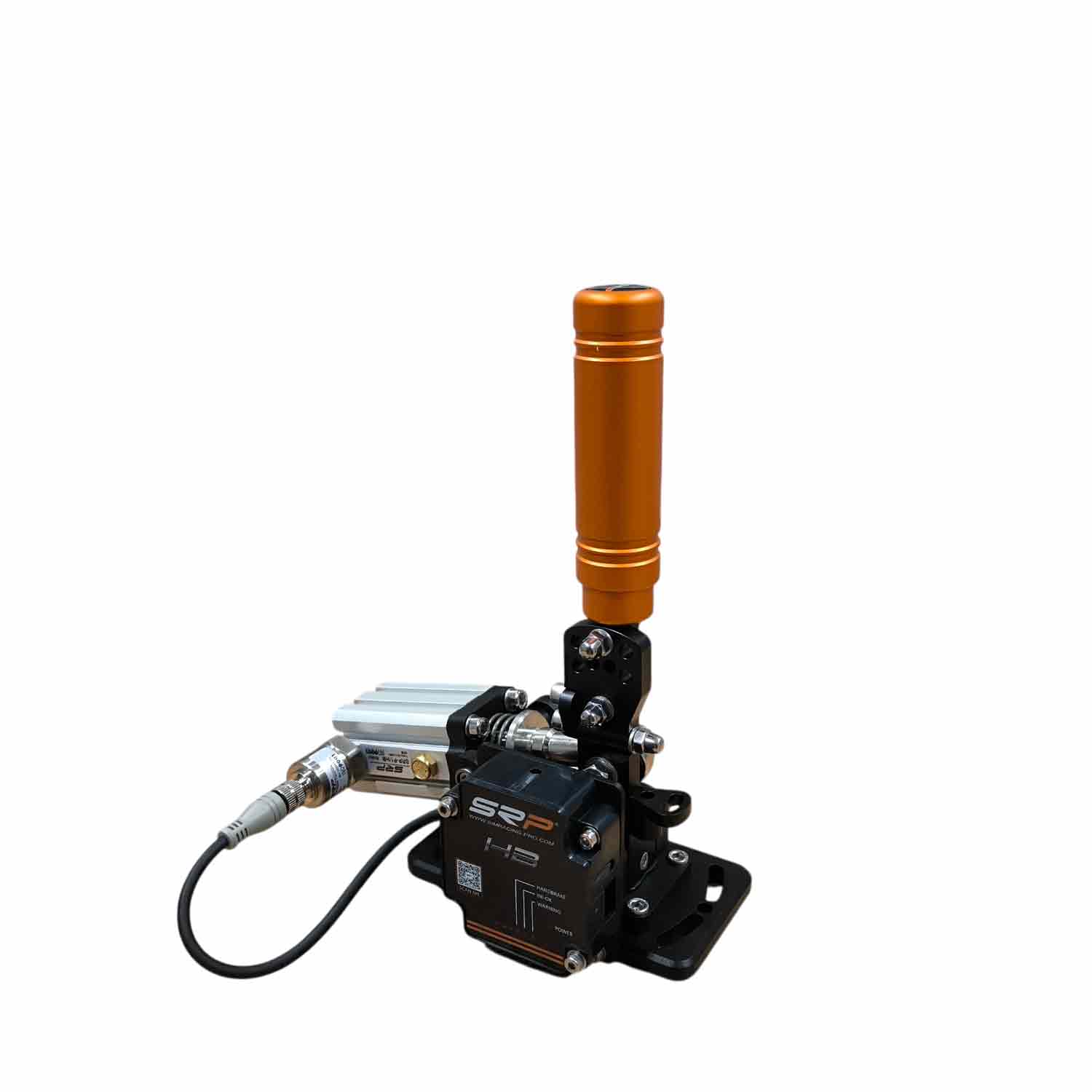
Progressive, repeatable, fluid-free. The architecture of the SRP® HB.
// 02 · The dataTechnology comparison table
| Criterion | Spring | Load cell + elastomer | Hydraulic | Pro pneumatic |
|---|---|---|---|---|
| Force curve | Linear | Progressive | Progressive | Progressive |
| Consistency over a stage | Good | Drifts with heat | Good | Constant |
| Consistency over years | Spring sags | Rubber wears | Seals age | Air does not fatigue |
| Fluid / leak risk | None | None | High | None |
| Maintenance | Low | Replace elastomers | Bleeding, seals | Zero |
| Best for | Casual | Rally | Purists | Rally & drift |
// 03 · Load cellWhy a load cell is not the whole story
A load cell is an excellent way to measure force, which is why it dominates brake pedals. But in most load cell handbrakes, the resistance still comes from a rubber elastomer. As you pull again and again on a long stage, friction heats the rubber, it softens, and the force you memorised on stage one is not the force you get on stage six.
We explain the same effect on pedals in our pneumatic vs load cell pedals guide — the physics is identical.
// 04 · HydraulicHydraulic: realistic, but at a cost
A converted real hydraulic handbrake gives a true pressure build-up. It also brings brake fluid, a master cylinder and seals into your living room. Under the repetitive load of simulation, seals wear; a single leak can damage the cockpit, the electronics of your direct drive base and the floor. Bleeding the system becomes part of your routine.
// 05 · PneumaticPneumatic: the curve of hydraulics, without fluid
A sealed air cylinder delivers the same progressive feel, because air resists more as it compresses. There is nothing to leak and nothing to fatigue. But not every pneumatic handbrake is equal. An entry-level unit may use a basic sensor, cast parts or a simple hardness knob. A pro unit is built around:
- A sealed industrial cylinder with SRP-designed pistons.
- Ceramic diaphragm transducers for stable readings.
- 100% AL6061, 5-axis CNC, 28 µm hard anodized, SUS303 shafts and SKF needle bearings.
- Tool-free throw, tension and tilt, plus free HBsetup software.
Read how the cylinder works in detail in pneumatic handbrake for sim racing.
// 06 · VerdictWhich handbrake should you choose?
Occasional rally
A spring handbrake will do the job, but expect a flat feel.
Weekly rally & drift
Go pneumatic. Check the build quality, not only the word "pneumatic".
Leagues & long sessions
A pro pneumatic unit with full adjustment and a real warranty.
For a complete buying guide with prices and setup advice, read the best handbrake for sim racing.
// FAQFrequently asked questions
What is the difference between a load cell and a pneumatic handbrake?
A load cell handbrake measures force, usually against a rubber elastomer that provides the resistance. A pneumatic handbrake gets its resistance from compressed air in a sealed cylinder. The air does not soften with heat or wear, so the feel stays consistent.
Are hydraulic handbrakes worth it for sim racing?
They feel realistic, but a real hydraulic system brings master cylinders, fluid and seals into your room. A leak can damage your cockpit, wheelbase or floor. A pneumatic handbrake gives a similar progressive curve without fluid.
Which handbrake technology is best for drift?
Drift needs fine modulation over a long pull. A progressive pneumatic curve lets you hold and adjust partial pressure precisely, which is why it suits drift better than a linear spring.
Is a Hall sensor handbrake good enough?
A Hall sensor is a reliable way to read position, but it does not decide the feel. The resistance medium — spring, elastomer or air — decides how the pull feels in your hand.
Which handbrake technology lasts longest?
A sealed pneumatic system has no spring to sag, no elastomer to compress and no fluid to leak, so it keeps the same curve over the longest time.
The pro pneumatic handbrake
Designed, machined and assembled in Barcelona. In stock, ships in 48h. 3-year warranty in Spain, 2 years international.
View SRP® HB — from €336