
The SimRacing Dictionary: Mastering Force Feedback (FFB) Tech
[EXECUTIVE BRIEFING] In the professional world of SimRacing and MotorSport, the difference between a podium and a DNF is often hidden in technical nuances like force feedback ffb tech. Whether you are navigating a tight chicane or managing a high-speed stint, understanding the biomechanics and telemetry of your cockpit is essential.
The sim racing industry has reached a critical inflection point. High-end direct drive wheelbases deliver incredible torque to your hands, but visual immersion and steering FFB are no longer enough. To achieve elite simulation, we must address how kinetic energy management and aerodynamic downforce translate directly to your feet.
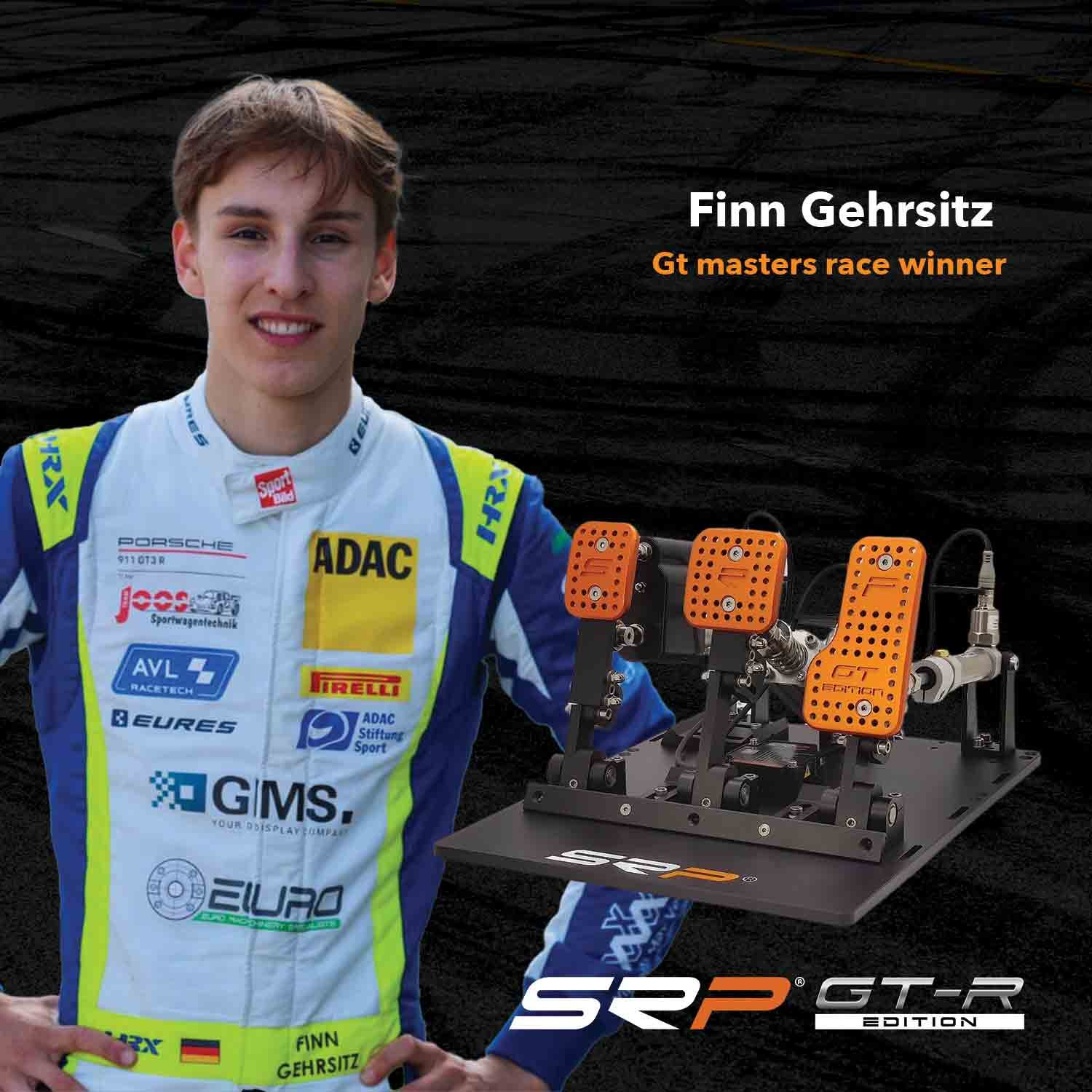
/// FORCE FEEDBACK FFB TECH & TELEMETRY DATA
/// The Physics of Weight Transfer
Load Cells vs. Native Physics
Let’s dissect the primary bottleneck in modern pedal hardware: Mechanical Flex and Thermal Drift. Traditional hardware often suffers from ‘Fading’—the loss of braking efficiency due to elastomer softening. During a 24-hour endurance stint, thermal degradation turns your precise pedal into a spongy mess.
This causes inconsistent trail braking and forces the driver into lock-ups or flat spots. You cannot rely on muscle memory when your brake bias feels different every lap due to material fatigue. Even the best steering force feedback ffb tech cannot save you from snap oversteer if your pedal inputs are constantly degrading.
💡 The Hardware Bottleneck
Perfecting your delta time requires absolute hardware stability. If your elastomers soften under heat, your kinetic data changes dynamically, destroying your muscle memory and lap consistency.
/// Active Pedals & Latency
The Danger of Algorithmic Resistance
The market is currently flooded with ‘Active Pedals’—motorized solutions attempting to bring force feedback ffb tech directly to the pedal faces. While they promise realism, they often deliver netcode issues and digital latency. Relying on a calculated software algorithm to generate physical resistance is a dangerous divebomb for your consistency.
Simulation should not mean inserting a micro-processor between your foot and the apex. It should mean recreating the raw hydraulic or pneumatic feel natively, ensuring your inputs remain organic and instant from the green flag to the checkered flag.
/// Pneumatic Supremacy
Eliminating Mechanical Compromise
This is where the SRP® Engineering philosophy redefines the paddock standard. Rather than using artificial force feedback ffb tech motors on our pedals, we eliminated the blistering issues of elastomers by utilizing Atmospheric Air. Our proprietary pneumatic architecture creates a perfect, natural pressure curve that is completely immune to heat.
Inside our AL6061-T6 aluminum monocoque chassis, 16-bit industrial transducers capture 65,536 steps of telemetry. No dead zones, no mechanical flex, just pure, instant data. Whether you are performing a heel-and-toe downshift or optimizing your threshold braking, SRP® provides the grip, linearity, and native physics required to conquer every split and maximize your iRating.
Technical Arsenal for Maximum Precision
Pair your high-end steering FFB with zero-fade pneumatic pedal technology.

SRP® GT-R
The Endurance Master. Built to survive 24h stints with zero thermal degradation. Perfect for consistent trail braking.
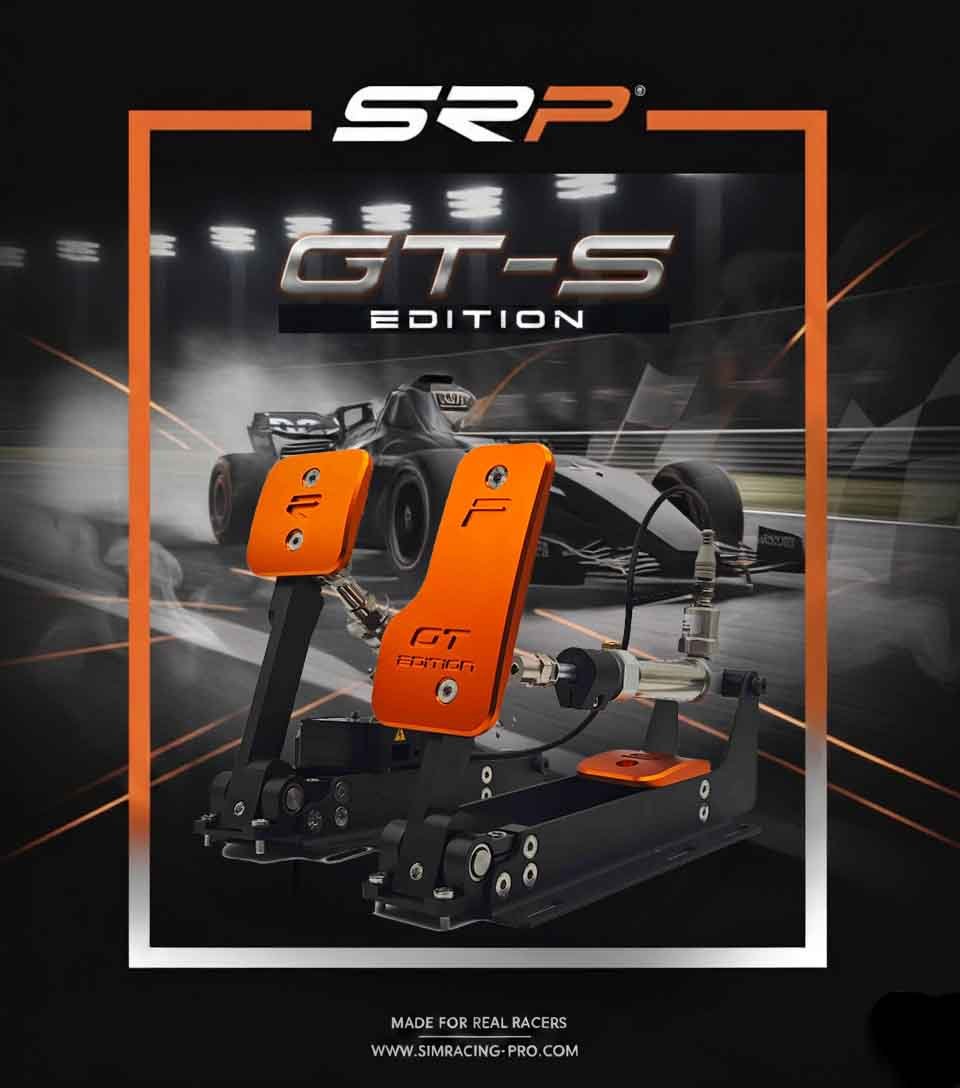
SRP® GT-S
Surgical precision for GT3 and Rally. Master the apex and optimize your braking zones with flawless pneumatic feel.
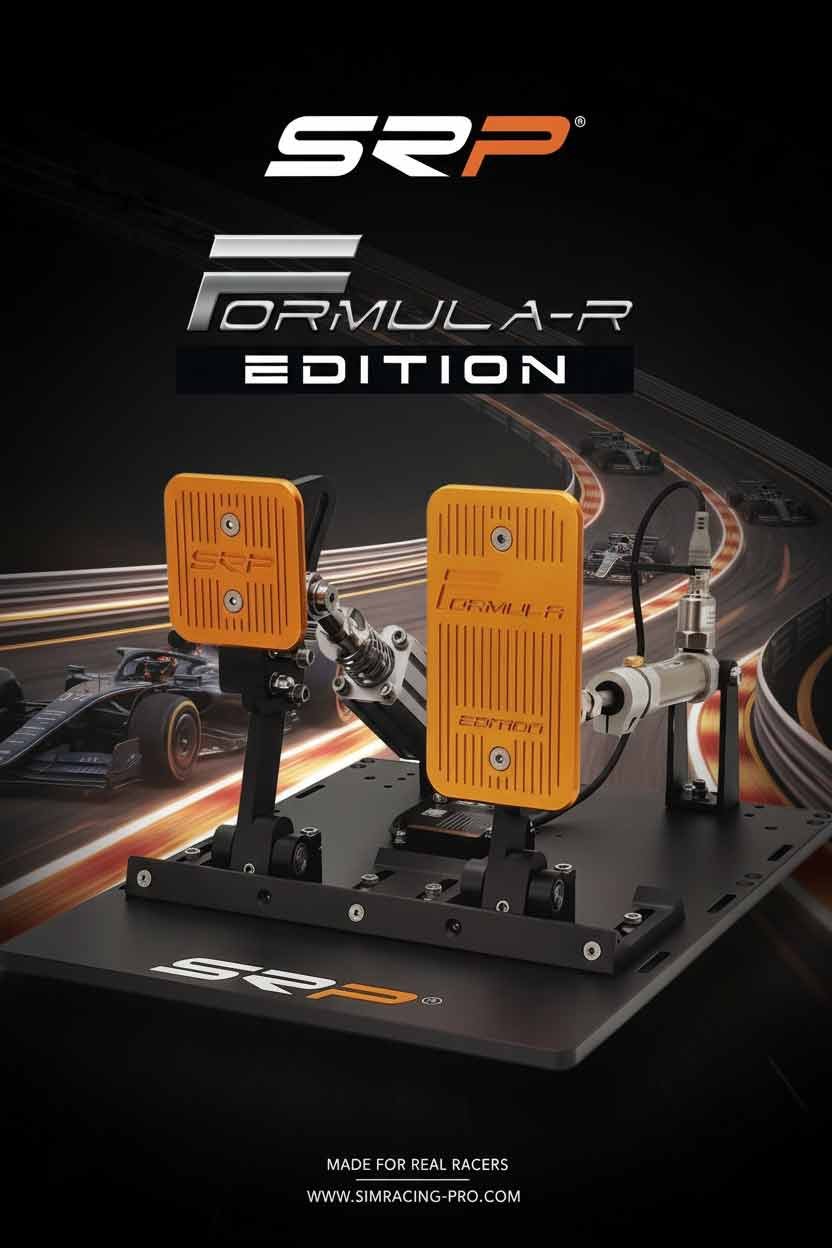
SRP® Formula-R
Ultimate Monocoque Rigidity. The Formula-R eliminates pedal plate flex for extreme high-downforce braking maneuvers.