
Beyond the Apex: The Engineering of Ergonomic Pedal Spacing
Global SimRacing Glossary & Biomechanical Precision UI
By optimizing your setup—specifically the distance between the brake and throttle—you drastically reduce sim racing ankle fatigue and open the door for advanced telemetry control.

/// The Physics of Weight Transfer & Ergonomics
Mastering Trail Braking and Throttle Modulation
Let’s dissect the primary bottleneck in modern rigs: Mechanical Flex and Thermal Drift. Traditional hardware often suffers from ‘Fading’—the loss of braking efficiency due to elastomer softening. During a 24-hour endurance stint, thermal degradation turns your precise pedal into a spongy mess. This causes inconsistent Trail Braking and forces the driver into ‘Lock-ups’ or ‘Flat Spots’.
You cannot rely on muscle memory when your ‘Brake Bias’ feels different every lap due to material fatigue. This inconsistency leads to ‘Aero Push’ and unexpected ‘Snap Oversteer’ at the limit. Proper ergonomic pedal spacing allows your foot to strike the pedal face perfectly square, applying linear pressure without lateral deflection.
The Anatomy of the Heel-and-Toe Technique
For drivers running H-pattern shifters in historic or rally disciplines, the Heel-and-Toe technique relies entirely on spatial awareness. If your pedal plates are too far apart, your ankle must roll at a dangerous degree, causing long-term joint stress. If they are too close, you risk accidental dual-input.
The market is currently flooded with ‘Active Pedals’ and motorized Force Feedback (FFB) solutions that promise realism but deliver ‘Netcode’ issues and digital latency. Relying on an algorithm to calculate your resistance instead of raw physics is a dangerous ‘Divebomb’ for your consistency. Simulation should recreate the ‘Hydraulic’ or ‘Pneumatic’ feel natively, ensuring that your ‘Delta Time’ remains green from ‘Green Flag’ to ‘Checkered Flag’.
LIVE PADDOCK DATABANK
/// High-Level Competition Architecture
This is where the SRP® Engineering philosophy redefines the ‘Paddock’ standard. To master ergonomic pedal spacing, we eliminated the ‘Blistering’ issues of elastomers by utilizing Atmospheric Air. Our proprietary pneumatic architecture creates a perfect ‘Pressure Curve’ that is immune to heat.
Inside our AI6061-T6 aluminum ‘Monocoque’ chassis, 16-bit industrial transducers capture 65,536 steps of telemetry. No ‘Dead Zones’, no ‘Mechanical Flex’, just pure data. Coupled with our infinitely adjustable pedal plates, you can align the FOV and pedal distance specifically to your hip pivot point. Whether you are performing a ‘Heel and Toe’ or optimizing your ‘Threshold Braking’, SRP provides the ‘Grip’ and ‘Linearity’ required to conquer every ‘Split’ and improve your ‘iRating’ significantly.
/// TECHNICAL ARSENAL
Deploy the ultimate pneumatic advantage. Select your chassis.

SRP® GT-R
The Endurance Master. Built to survive 24h stints with zero thermal degradation. The ultimate cure for fading.
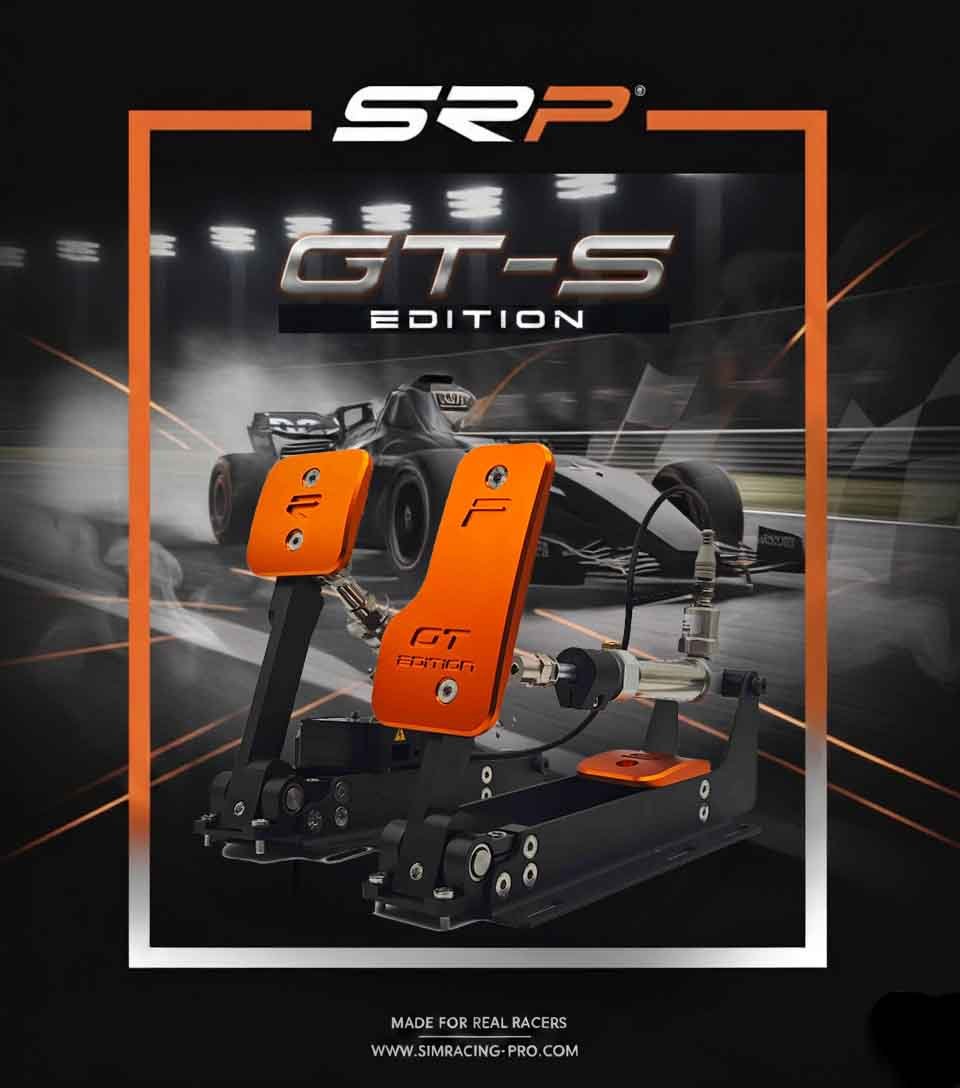
SRP® GT-S
Surgical precision for GT3 and Rally. Master the Apex with pure pneumatic linearity and feedback.
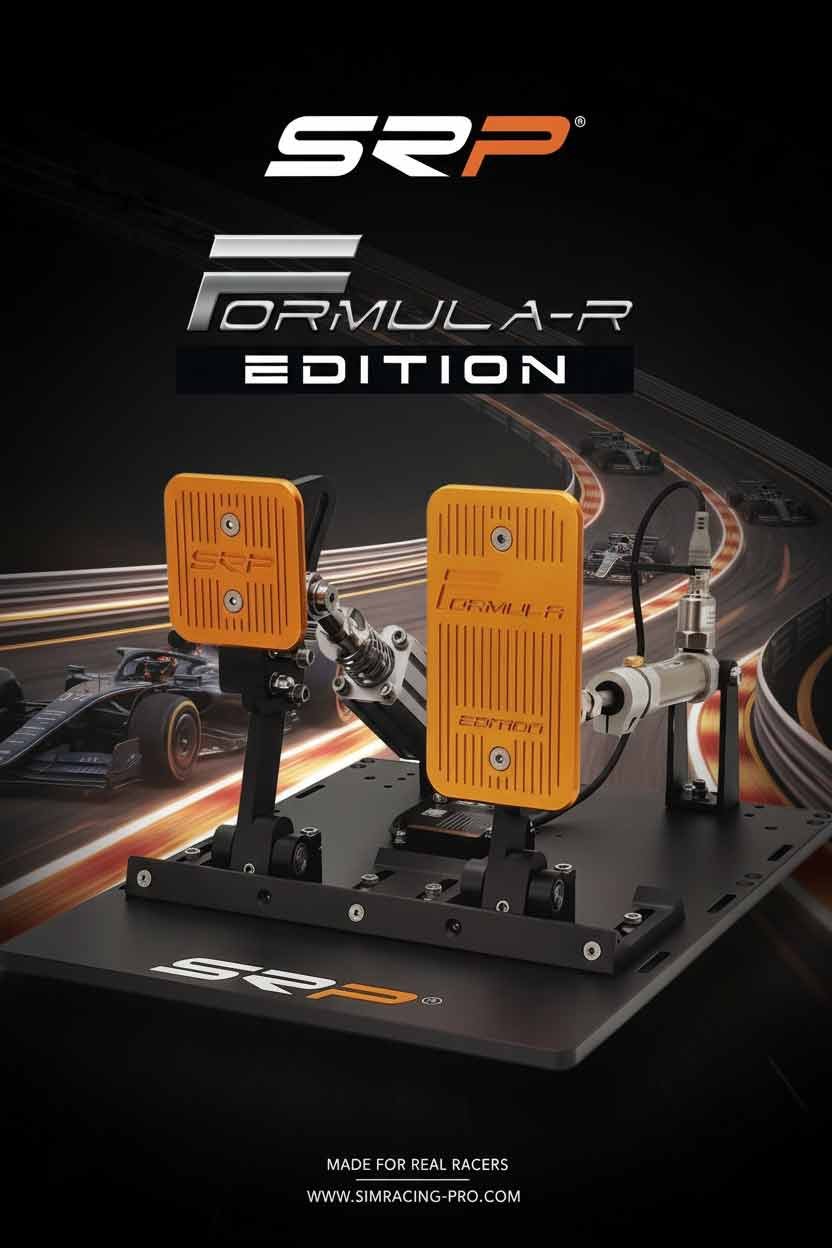
SRP® Formula-R
Ultimate Monocoque Rigidity. Built for extreme high-downforce braking maneuvers without mechanical flex.