
The Geometry of Speed: Ultimate Sim Racing Rig Ergonomics
[EXECUTIVE BRIEFING] You can invest in the most advanced pneumatic sim racing pedals on the planet, but if your biomechanics are compromised, your lap times will suffer. In high-level motorsport, speed is a direct byproduct of physical comfort, stability, and muscle isolation.
/// Sim Racing Pedal Positioning
The Biomechanical Baseline
Mastering your sim racing seating position is just as critical as dialing in your Field of View (FOV). The most common mistake amateur drivers make is mounting their seat too close to the pedal deck. If your leg is bent at a sharp 90-degree angle, applying threshold braking pressure forces your lower back into the seat, rather than isolating the force through your leg muscles.
The 120-Degree Golden Rule
When you press the brake to its absolute maximum (100% load pressure), your knee should maintain a bend of approximately 120° to 130°. This specific geometry forces your ankle and calf to act as the primary pivots for fine modulation, ensuring flawless execution of advanced techniques like trail braking.
/// FIG 1.0: BIOMECHANICAL ALIGNMENT
/// GT vs. Formula Seating Geometry
Anchoring the Kinetic Pivot
A Formula seating position—where feet are elevated near chest level—requires a drastically different pedal face angle than an upright GT or Rally setup. However, regardless of the discipline, to maintain pure telemetry consistency, your heel must be anchored perfectly to the deck.
A floating heel forces your brain to calculate balance rather than pressure. Our SRP® Adjustable Heel Rest solves ergonomic misalignment using 5-axis CNC machined Al6061 aluminum:
- Dual Inclinations: 70° optimized for upright GT racing or 90° for Formula sim rigs.
- Precision Adjustment: Fine-tune height and distance to match your specific racing shoe geometry perfectly.
- Total Stability: Eliminates microscopic foot slippage during aggressive trail braking and downshifting.
/// Professional Insight
A floating heel is the #1 enemy of consistent throttle application. Anchoring your foot allows the Central Nervous System (CNS) to focus entirely on pressure modulation rather than physical balance. Precision starts from the ground up.
/// The Inverted Pedal Protocol
Rally, Drift, and Classic Street Setups
If you primarily simulate rally stages or drive manual transmission road cars, a standard floor-mounted pedal box can feel unnatural. Inverting your pedals changes the physical pivot arc, drastically reducing ankle strain during repetitive heel-and-toe maneuvers.
The SRP® Inverted Pedals Kit offers 11 extreme mounting configurations to perfectly replicate iconic cockpit layouts, giving you the authentic downward push required for historic racing.
When to Floor-Mount vs. Invert
Note from the Paddock: While inverted setups are phenomenal for Drift and Rally immersion, we highly recommend standard floor-mounts for high-downforce GT3 and Formula circuit competition. Floor mounting ensures the absolute most rigid response during extreme 100kg+ braking forces.
/// Eliminating Structural Flex
Why Dedicated Baseplates Are Essential
When you apply extreme pressure to an SRP® pneumatic brake system, any microscopic flex in your aluminum profile rig is immediately registered as "mushy" or inconsistent feedback. Ironically, rig flex mimics the thermal fade of inferior rubber load cell pedals, completely ruining your muscle memory.
The 16-Bit Transducer Advantage
Using a dedicated SRP® Baseplate anchors your pedals as a single, unified monocoque block. This structural integrity ensures that 100% of your physical effort is captured strictly by our 16-bit industrial pressure transducers, delivering pure, unadulterated braking telemetry directly to your simulator.
PADDOCK FAQ: SETUP & ERGONOMICS
/// CONFIGURE YOUR PROFESSIONAL SETUP
Complete your cockpit with aerospace-grade ergonomics and zero thermal fade.

SRP® GT-R
The Endurance Master. Engineered for zero thermal degradation during long stints. The baseline for professional rigs.
CONFIGURE SETUP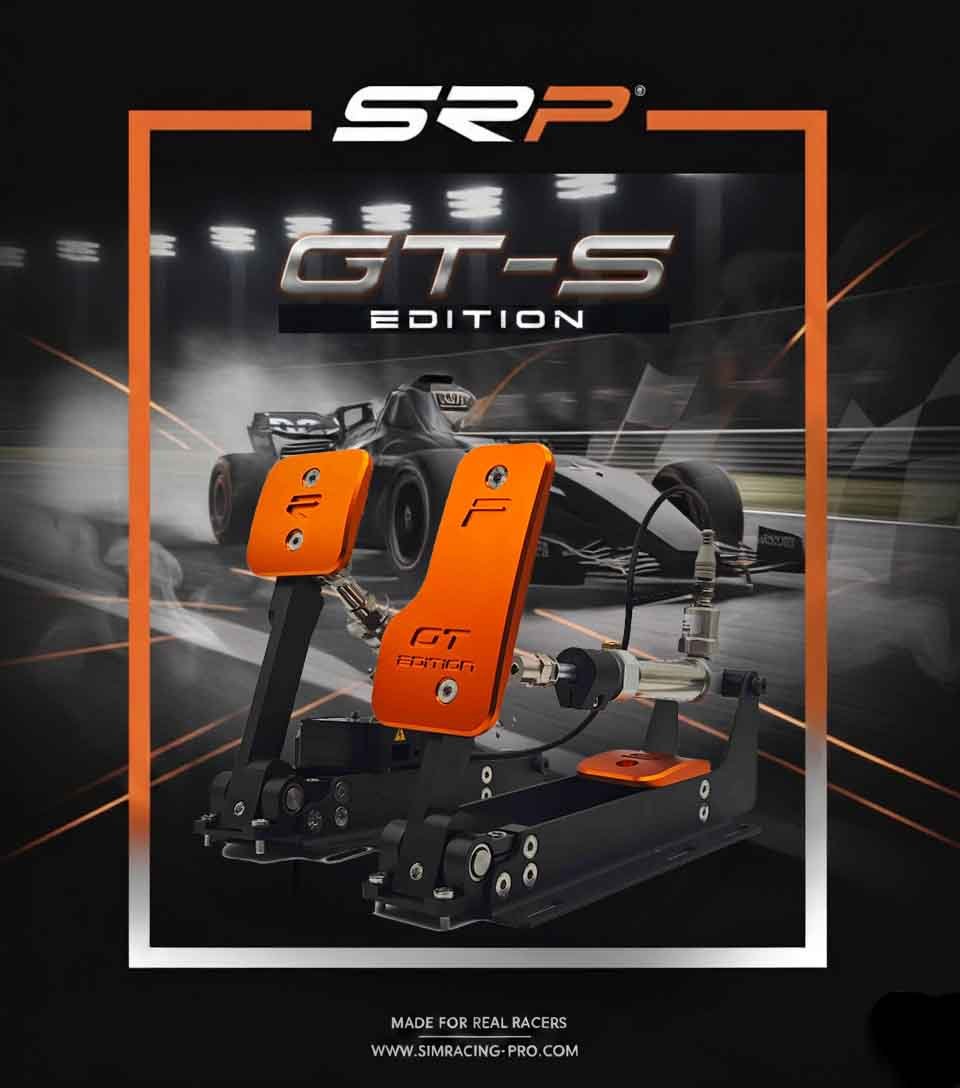
SRP® GT-S
GT3 & Rally Precision. Master every apex with pneumatic linearity. Perfect for technical setups and travel adjustment.
CONFIGURE SETUP
SRP® Upgrades
From Adjustable Heel Rests to Inverted Kits. Engineering the perfect link between your biomechanics and the virtual chassis.
EXPLORE ACCESSORIES