
Load Cell vs. Pneumatic Pedals: What’s the Real Difference?
[EXECUTIVE BRIEFING] Every sim racer eventually hits a wall. You spend hours analyzing telemetry, adjusting your car setup, and practicing your trail braking, but your lap times inexplicably plateau. If you are still using elastomer-based brakes, the problem might not be your driving technique; it might be the physical limitations of your hardware.
When upgrading a high-end rig, the debate between load cell vs pneumatic pedals is the ultimate crossroads. While load cells have been the consumer standard for years, pneumatic technology is rewriting the rules of professional eSports. Let’s dive into the science of why atmospheric air pressure is outperforming strain gauges on the virtual track.
/// HARDWARE TELEMETRY & KINETIC ANALYSIS
/// The Illusion of Consistency
The Load Cell Elastomer Problem
To understand the leap to pneumatic systems, we first need to look at how a standard load cell works. A load cell measures force (pressure) rather than physical travel (distance), which is a massive upgrade from entry-level potentiometer pedals.
However, load cells rely heavily on polyurethane elastomers or rubber bushings to provide the physical resistance your foot feels. This introduces a critical flaw in endurance racing: Thermal Fade.
When you brake aggressively—corner after corner, in a 3-hour stint—internal friction and ambient heat change the physical properties of those rubber elastomers. They get softer. By lap 40, applying 50kg of force feels entirely different physically than it did on lap 1. Your brain expects a certain stiffness, but the pedal travels further. This micro-inconsistency destroys your ability to execute a perfect pit window strategy.
💡 The Hardware Bottleneck
Racing is all about muscle memory. If your pedal’s stiffness changes as the elastomers heat up, you are forced to consciously adjust your braking force mid-race, which costs you vital tenths of a second per lap.
/// The Physics of Air
Why Pneumatic is the Ultimate Solution
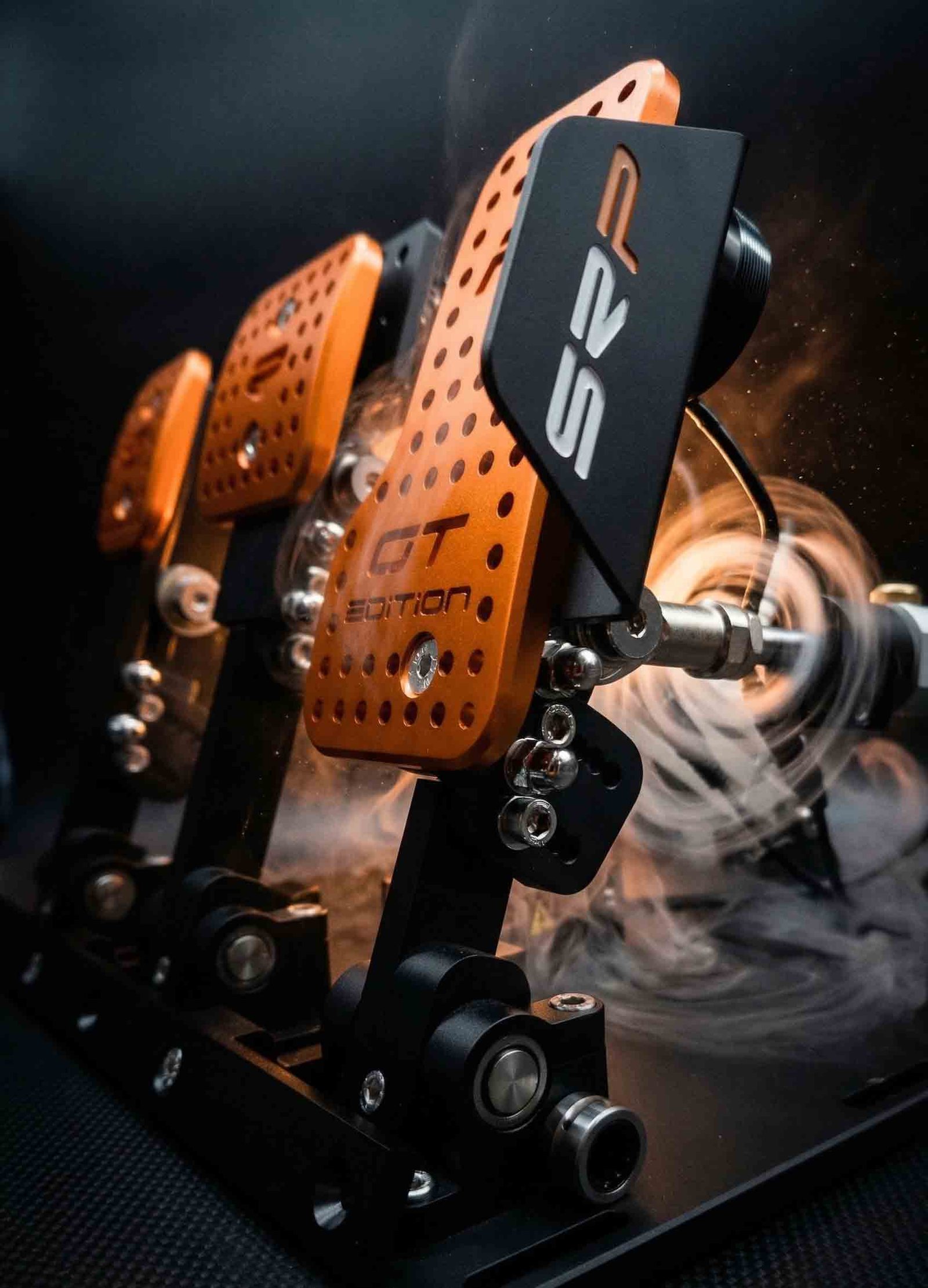
Pneumatic pedals, like the SRP® GT-S and GT-R series, discard rubber elastomers entirely. Instead, they use atmospheric air and fluid dynamics to generate resistance.
Why does this matter? Because unlike rubber, the physics of compressed air within a sealed, aerospace-grade cylinder do not suffer from thermal degradation during a race. When comparing load cell vs pneumatic pedals, the defining factor is absolute consistency.
The resistance profile you feel on the first turn of the Nürburgring will be mathematically identical to the resistance you feel four hours later. Pneumatic pedals lock in your muscle memory. Once you learn the optimal braking point, you can repeat it blindly, thousands of times.
/// Enter the SRP® R-Piston V5
Engineered for eSports Dominance
At SimRacing Pro, we engineered the patented R-Piston V5. It doesn’t just mimic a real GT3 brake cylinder; it operates on the exact same physical principles. If you are a casual driver, a standard load cell will serve you well. But if you are chasing alien lap times or competing in high-stakes eSports leagues, the choice is clear.
- Zero Thermal Fade: No elastomers means no temperature variance or material softening.
- Real-Time Pressure Tuning: Adjust the pedal stroke from 15mm to 45mm, letting you dial in the exact travel and stiffness to match a Formula car or a heavy Rally rig.
- Unfiltered Telemetry: With 16-Bit resolution (65,536 steps), the pneumatic sensor translates your exact foot pressure into the simulator with zero latency.
💬 Paddock FAQ: Load Cell vs Pneumatic
Load cell pedals measure force but rely on rubber elastomers for physical resistance, which soften under heat (thermal fade) and cause inconsistencies. Pneumatic pedals use atmospheric compressed air, which does not degrade or change stiffness during long endurance races, ensuring perfect muscle memory.
For casual racers, load cells are adequate. However, for professional eSports and high-end simulation, pneumatic pedals are vastly superior. Because air pressure does not suffer from thermal fade like rubber elastomers do, pneumatic pedals offer mathematically perfect consistency for trail braking over long stints.
Technical Arsenal: The Pneumatic Upgrade
Eliminate thermal fade and master your trail braking.

SRP® GT-R
The Endurance Master. Built to survive 24h stints with zero thermal degradation. Perfect for consistent trail braking.
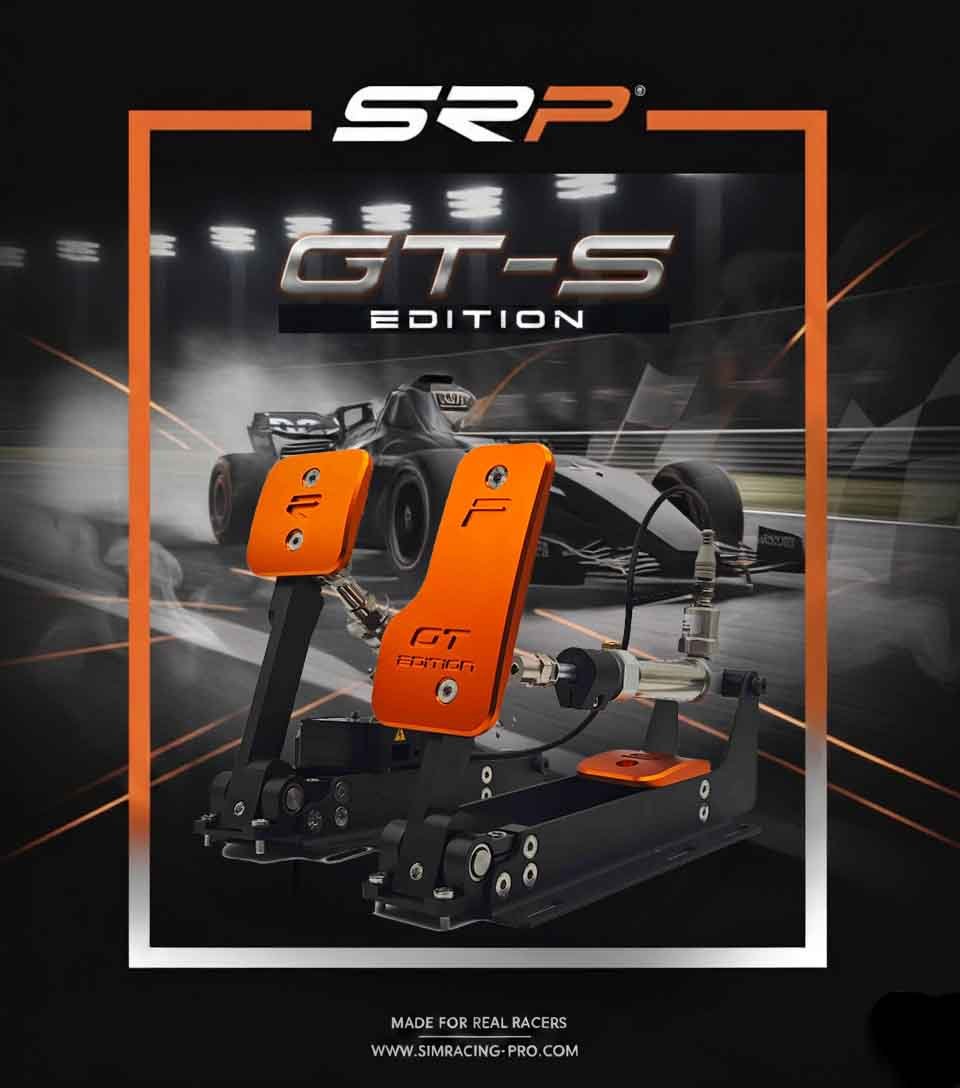
SRP® GT-S
Surgical precision for GT3 and Rally. Master the apex and optimize your braking zones with flawless pneumatic feel.
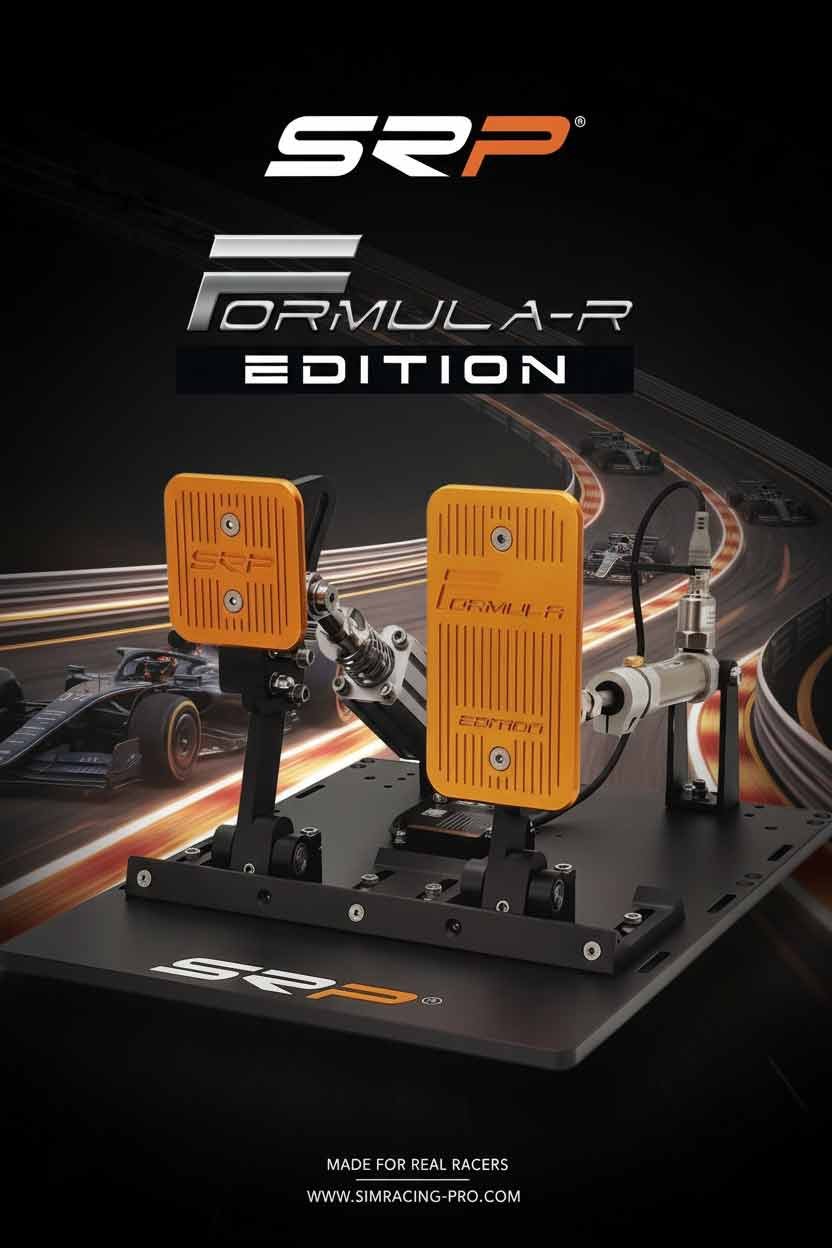
SRP® Formula-R
Ultimate Monocoque Rigidity. The Formula-R eliminates pedal plate flex for extreme high-downforce braking maneuvers.