
Jenseits des Scheitelpunkts: die Technik des ergonomischen Pedalabstands
Globales Sim-Racing-Glossar & biomechanische Präzision
Indem Sie Ihr Setup optimieren – insbesondere den Abstand zwischen Bremse und Gas –, reduzieren Sie die Knöchelermüdung im Sim Racing drastisch und öffnen die Tür zu fortgeschrittener Telemetriekontrolle. Für die komplette Sitzposition lesen Sie unseren Leitfaden Pedalpositionierung und Ergonomie.

/// Die Physik der Gewichtsverlagerung & Ergonomie
Trail Braking und Gasdosierung meistern
Let’s dissect the primary bottleneck in modern rigs: Mechanical Flex and Thermal Drift. Traditional hardware often suffers from ‚Fading’—the loss of braking efficiency due to elastomer softening. During a 24-hour endurance stint, thermal degradation turns your precise pedal into a spongy mess. This causes inconsistent Trail Braking and forces the driver into ‚Lock-ups‘ or ‚Flat Spots‘.
You cannot rely on muscle memory when your ‚Brake Bias‘ feels different every lap due to material fatigue. This inconsistency leads to ‚Aero Push‘ and unexpected ‚Snap Oversteer‘ at the limit. Proper ergonomischen Pedalabstand allows your foot to strike the pedal face perfectly square, applying linear pressure without lateral deflection.
Anatomie der Spitze-Hacke-Technik
Für Fahrer mit H-Schaltung in historischen oder Rallye-Disziplinen hängt Spitze-Hacke ganz vom räumlichen Gefühl ab. Liegen die Pedalplatten zu weit auseinander, muss der Knöchel in einem gefährlichen Winkel abrollen, was das Gelenk langfristig belastet. Liegen sie zu eng, riskieren Sie versehentliche Doppelbetätigung.
The market is currently flooded with ‚Active Pedals‘ and motorized Force Feedback (FFB) solutions that promise realism but deliver ‚Netcode‘ issues and digital latency. Relying on an algorithm to calculate your resistance instead of raw physics is a dangerous ‚Divebomb‘ for your consistency. Simulation should recreate the ‚Hydraulic‘ or ‚Pneumatic‘ feel natively, ensuring that your ‚Delta Time‘ remains green from ‚Green Flag‘ to ‚Checkered Flag‘.
LIVE-PADDOCK-DATENBANK
/// Wettbewerbsarchitektur auf höchstem Niveau
This is where the SRP® Engineering philosophy redefines the ‚Paddock‘ standard. To master ergonomischen Pedalabstand, we eliminated the ‚Blistering‘ issues of elastomers by utilizing Atmospheric Air. Our proprietary pneumatic architecture creates a perfect ‚Pressure Curve‘ that is immune to heat.
Inside our AI6061-T6 aluminum ‚Monocoque‘ chassis, 16-bit industrial transducers capture 65,536 steps of telemetry. No ‚Dead Zones‘, no ‚Mechanical Flex‘, just pure data. Coupled with the right spacing (the SRP® GT-S pedals mount individually, so you can set any gap, while the SRP® GT-R sits on one base with three fixed spacing positions), you can align the FOV and pedal distance specifically to your hip pivot point. Whether you are performing a ‚Heel and Toe‘ or optimizing your ‚Threshold Braking‘, SRP provides the ‚Grip‘ and ‚Linearity‘ required to conquer every ‚Split‘ and improve your ‚iRating‘ significantly.
Sie bauen das Cockpit von Grund auf? Folgen Sie unserem Leitfaden zum Sim-Rig-Aufbau.
/// TECHNISCHES ARSENAL
Nutzen Sie den ultimativen pneumatischen Vorteil. Wählen Sie Ihr Chassis.

SRP® GT-R
Der Langstrecken-Meister. Gebaut für 24-h-Stints ohne thermische Degradation. Die ultimative Lösung gegen Fading.
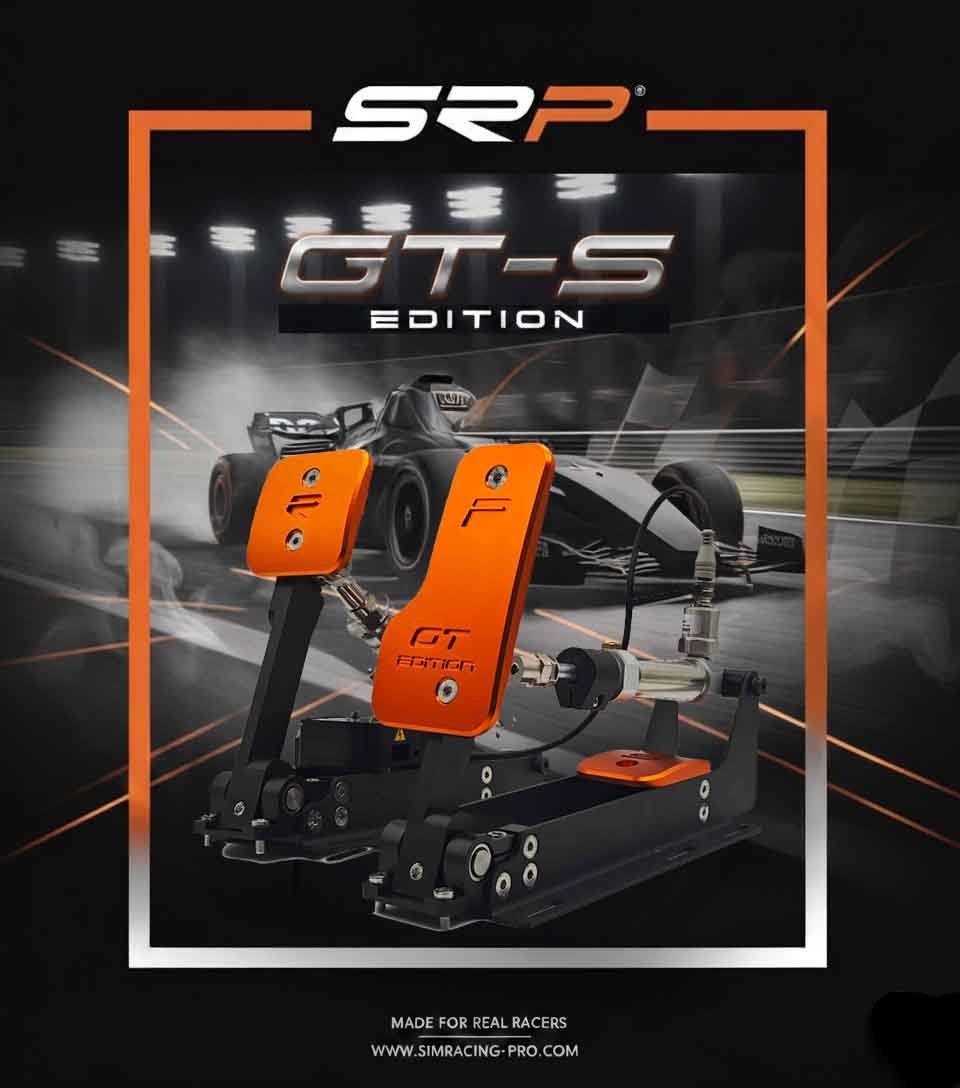
SRP® GT-S
Chirurgische Präzision für GT3 und Rallye. Meistern Sie den Scheitelpunkt mit reiner pneumatischer Linearität und Rückmeldung.
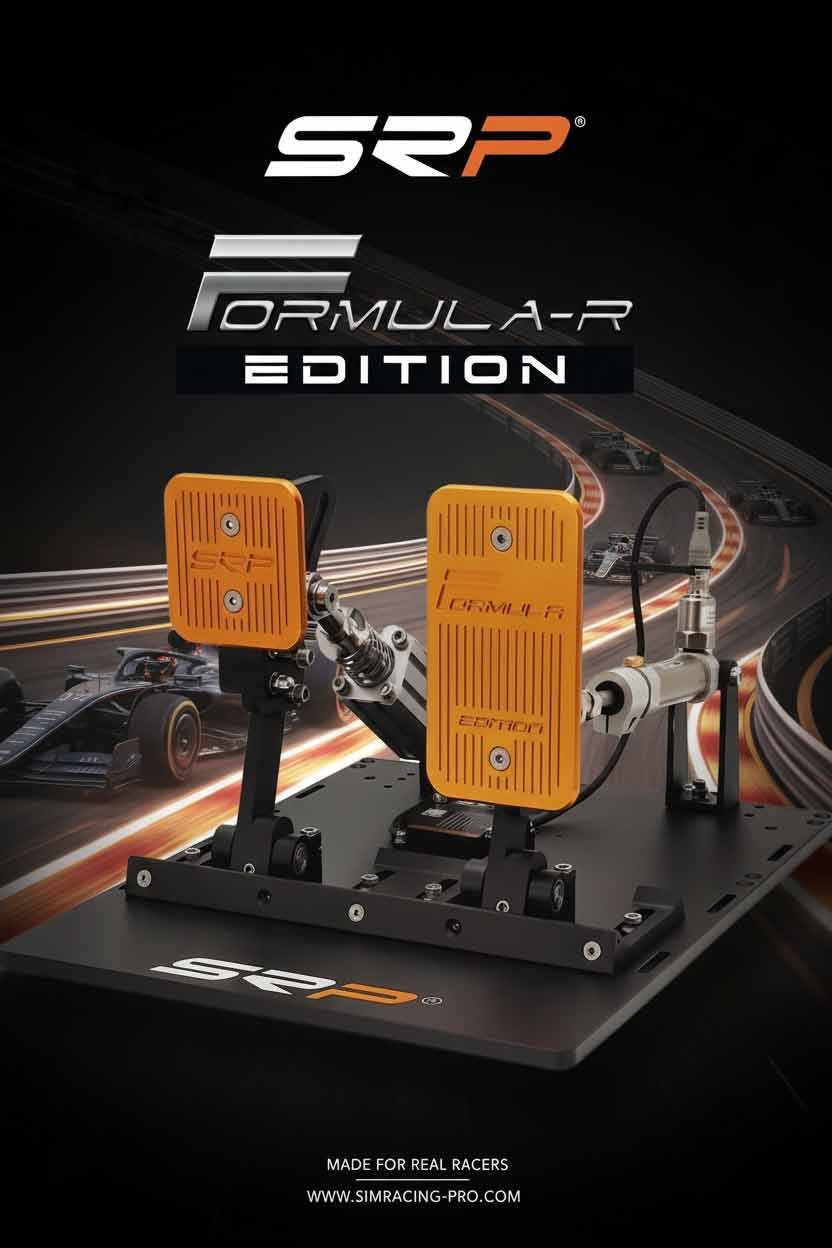
SRP® Formula-R
Ultimative Monocoque-Steifigkeit. Gebaut für extreme Bremsmanöver mit hohem Abtrieb ohne mechanischen Flex.